China Top Engineering Ceramics Suppliers for Global Buyers
China has become a major sourcing destination for advanced Engineering Ceramics, supporting industries from semiconductor equipment to medical devices. Buyers can find alumina, zirconia, silicon carbide, silicon nitride, and machinable ceramic components from specialized manufacturers. The strongest suppliers do more than offer competitive prices. They control powder preparation, forming, sintering, grinding, inspection, and packaging with measurable consistency.
Dr. David W. Richerson, a recognized ceramic engineering authority, wrote, “The properties of ceramics are determined not only by their composition, but also by their processing.” This principle remains highly practical. A dense alumina seal may look flawless under normal light, yet a small pore can affect leakage performance. A zirconia part may meet the drawing, but its surface finish can still influence wear. Material selection is only one part of the decision.
This guide introduces China’s top Engineering Ceramics suppliers for global buyers. It examines technical capabilities, quality systems, customization experience, production scale, and export communication. Certifications matter. So do inspection records, sample approval procedures, and realistic lead times. However, no supplier is perfect for every application. Some factories excel at mass production, while others handle complex prototypes better. Buyers should verify claims through drawings, test reports, audits, and trial orders.
That extra effort is worthwhile.
A lower quotation can hide higher machining costs, inconsistent tolerances, or delayed replacements. Supplier evaluation should therefore balance price, engineering support, traceability, and long-term reliability. The following overview aims to make that comparison clearer, while recognizing one uncomfortable fact: technical promises still require evidence.
Types of Engineering Ceramics Supplied by Chinese Manufacturers
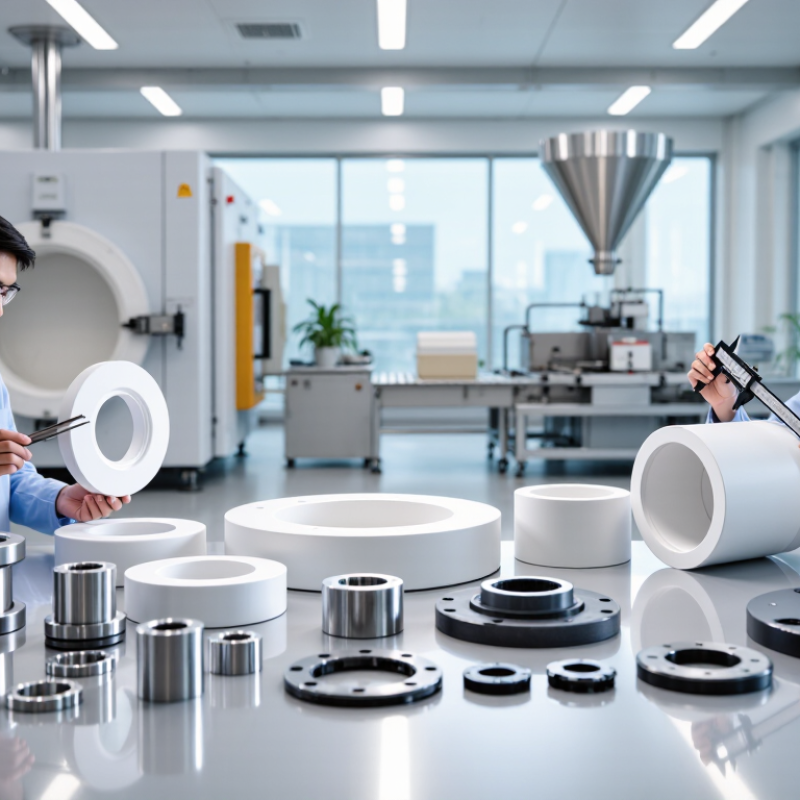
Chinese manufacturers supply a broad range of engineering ceramics for industrial applications.
Alumina is common in electrical insulators, wear plates, tubes, and pump components. It offers strong hardness and stable insulation.
Zirconia suits precision parts, cutting tools, seals, and dental or medical equipment components. Its toughness is useful where sudden impact may occur.
Silicon carbide handles high temperatures, corrosive chemicals, and abrasive particles. Manufacturers produce it as kiln furniture, mechanical seals, heat exchangers, and wear-resistant linings. Silicon nitride is lighter and performs well in bearings, furnace parts, and high-speed mechanical systems. Other available materials include cordierite, steatite, zirconia-toughened alumina, and machinable glass ceramics. Forms may include discs, rings, substrates, rods, nozzles, and custom assemblies. Material selection is not always obvious.
Tips: Ask for chemical composition, density, hardness, porosity, thermal expansion, and strength data. Request samples before approving mass production. Inspect surface finish under consistent lighting, especially on sealing faces. Confirm tolerances with technical drawings, not simple product photos. Batch traceability and independent test reports improve purchasing confidence. A polished catalog can still hide uneven shrinkage or edge chipping. These issues are often discovered only after machining. Chinese suppliers with clear process records, controlled firing schedules, and responsive engineering support are usually easier to evaluate. Still, buyers should verify every critical claim.
Key Properties and Applications of China-Made Engineering Ceramics
China-made engineering ceramics are valued for hardness, wear resistance, thermal stability, and electrical insulation. Alumina suits pump seals, valve parts, and electronic substrates. Zirconia offers higher fracture toughness for cutting tools and precision components. Silicon carbide performs well in furnace furniture, heat exchangers, and abrasive environments.
A 2024 Grand View Research report estimated the global advanced ceramics market at about USD 11.8 billion in 2023. It also projects continued growth through 2030, driven by electronics, energy, and medical manufacturing. China’s broad powder-processing and sintering capacity supports competitive production, especially for custom batches. However, low price alone proves little. Buyers should review density, porosity, surface roughness, and Weibull strength data.
In practical sourcing, experienced engineers request sample parts before approving volume orders. They inspect chipped edges, dimensional drift, and glaze consistency under actual operating conditions. ISO 9001 certification can support process reliability, but it cannot replace independent testing. Material certificates may also omit thermal-shock results. That gap matters. A ceramic part can meet hardness targets and still fail after repeated heating and cooling. Chinese suppliers with controlled pressing, sintering, grinding, and inspection systems are better positioned for demanding applications. Still, specifications should be reviewed carefully; even a well-made batch may need design adjustments.
How to Evaluate China’s Top Engineering Ceramics Suppliers
China’s top engineering ceramics suppliers should be judged by evidence, not showroom polish. Request certificates, process records, and recent batch data. ISO’s Survey 2022 reported more than 1.26 million ISO 9001 certificates worldwide. A certificate helps, but it does not prove stable zirconia strength or alumina purity.
Ask suppliers to identify powder grades, forming methods, sintering temperatures, and inspection points. Compare density, hardness, fracture toughness, dielectric strength, and dimensional tolerance. ASTM test methods should appear in laboratory reports. An independent laboratory should verify critical results. One report is not enough.
Production capacity also needs careful checking. Review furnace loading records, calibration dates, maintenance logs, and rejection rates for at least three months. A factory tour can look impressive. It can also hide subcontracted processes. Confirm which operations happen inside the facility, and request traceability from raw powder to packed components. The U.S. Geological Survey’s Mineral Commodity Summaries 2024 highlights the supply sensitivity of several mineral inputs. Therefore, ask about approved alternative materials and documented change control. This is often overlooked.
Samples should match the final drawing, not a convenient showcase piece. Test thermal cycling, wear, corrosion, or electrical performance under real operating conditions. Delivery promises need evidence from historical shipment records. Price matters, but an unexplained discount may signal weaker inspection or unstable inputs. I would still keep one doubt: supplier data can be accurate yet incomplete. Independent testing remains the more reliable buying decision.
Manufacturing Standards, Quality Control, and Certifications
China’s engineering ceramics suppliers serve demanding industries with alumina, zirconia, silicon carbide, and nitride components. Their reliability depends on controlled manufacturing, not attractive samples alone.
A capable factory follows documented procedures for powder preparation, pressing, sintering, grinding, and final inspection. Operators record furnace temperature curves and holding times for every production batch. Dimensional checks use calibrated micrometers, CMM equipment, or optical comparators. Surface defects are examined under controlled lighting. It feels basic, but small cracks can appear after machining.
Quality systems should align with recognized standards such as ISO 9001. Environmental controls may follow ISO 14001, while laboratories often apply ISO/IEC 17025 principles. Buyers should verify certificate numbers, issuing bodies, expiry dates, and covered production sites. The certificate scope matters. A document for trading activities does not prove ceramic process capability.
Reliable suppliers provide material certificates, inspection reports, traceability records, and sample retention procedures. For critical parts, ask for density, hardness, strength, thermal shock, and dielectric test data. Independent laboratory testing can confirm supplier claims before mass production. It costs more at the beginning. Rework costs more later.
Factory audits reveal details paperwork may hide. Check powder storage, humidity control, worker training, and nonconforming-product areas. One weakness should not define the supplier, but it deserves investigation. Even experienced teams can miss tolerance drift between batches. Clear drawings, agreed acceptance limits, and periodic audits reduce that risk for global buyers.
China Top Engineering Ceramics Suppliers for Global Buyers
Typical density comparison of widely used engineering ceramics. Density is a practical reference for evaluating material selection, dimensional consistency, and incoming quality-control records.
Reference values are representative technical ranges for commonly specified grades: alumina 95%, alumina 99.5%, yttria-stabilized zirconia, silicon nitride, and silicon carbide. Actual density may vary with purity, porosity, additives, and manufacturing process. Buyers should request ISO 9001 quality-system documentation, material certificates, dimensional inspection reports, and test results from accredited laboratories where applicable.
Ordering, Customization, and Global Shipping Considerations
When ordering engineering ceramics from China, begin with a controlled specification, not a product photo. State the ceramic grade, dimensions, surface finish, density, hardness, operating temperature, and electrical requirements. Include drawings with tolerances and identify critical surfaces. Ask for a sample before approving production. Shorter is safer. An experienced supplier should explain process limits, inspection methods, minimum order quantities, and realistic lead times. Request material certificates, dimensional reports, and a traceable batch code. Do not accept vague claims. Some suppliers may promise every tolerance, then revise it after tooling begins. That warning deserves attention.
Customization often requires machining, grinding, sintering, or a dedicated mold. Confirm who owns the drawing, tooling, and approved sample. Clarify revision control in writing. For tight tolerances, agree on measurement equipment and gauge calibration before production. Ask whether shrinkage compensation can change final dimensions. A small design change can affect yield, price, and delivery. Build a pilot lot into the purchasing plan. It may cost more. It can prevent costly rework. That trade-off is easy to underestimate.
Global shipping needs equal care. Confirm the Incoterm, export documents, commercial invoice, packing list, certificate of origin, and agreed customs classification. Use moisture-resistant packaging, corner protection, and internal cushioning for brittle parts. Photographs of packed cartons help resolve damage claims. Compare air and sea freight against production urgency, not freight price alone. Ask for carton dimensions, gross weight, and pallet details before booking. Insurance terms should be clear. Allow buffer time for port congestion and inspection. Cheap shipping can become expensive after delays. Review each shipment’s results and adjust the next order.