Inquiry
Form loading...
Choosing China Top Alumina Ceramic Bearings and Shafts Suppliers? The answer depends on operating conditions, not just a supplier’s catalog. Alumina Ceramic Bearings And Shafts can suit applications needing electrical insulation, corrosion resistance, and wear resistance. Yet alumina is brittle compared with many metals. Impact, misalignment, or sudden temperature changes can still cause failure.
Market reports help frame the opportunity, but they require careful reading. Grand View Research’s Advanced Ceramics Market Size, Share & Trends Analysis Report reviews demand across materials and applications. Mordor Intelligence’s ceramic bearings market analysis examines the broader component market. Neither report, by itself, verifies the quality of an individual Chinese manufacturer. That matters. Market growth is not proof of product reliability.
For supplier comparisons, request material composition, dimensional tolerances, inspection records, and application-specific test results. Ask how the company checks shaft straightness and bearing runout. For a high-speed assembly, even a small alignment error may create vibration, noise, or premature wear. Request sample parts when practical, then evaluate them under representative loads and temperatures. A polished surface looks convincing. It is not enough.
This guide will compare supplier capabilities, product range, manufacturing evidence, and communication practices. It will also distinguish published specifications from claims that need independent confirmation. Some listings may lack clear test methods or traceable data; that gap deserves attention, not guesswork. A suitable supplier is the one that can explain how its product performs in your actual machine.
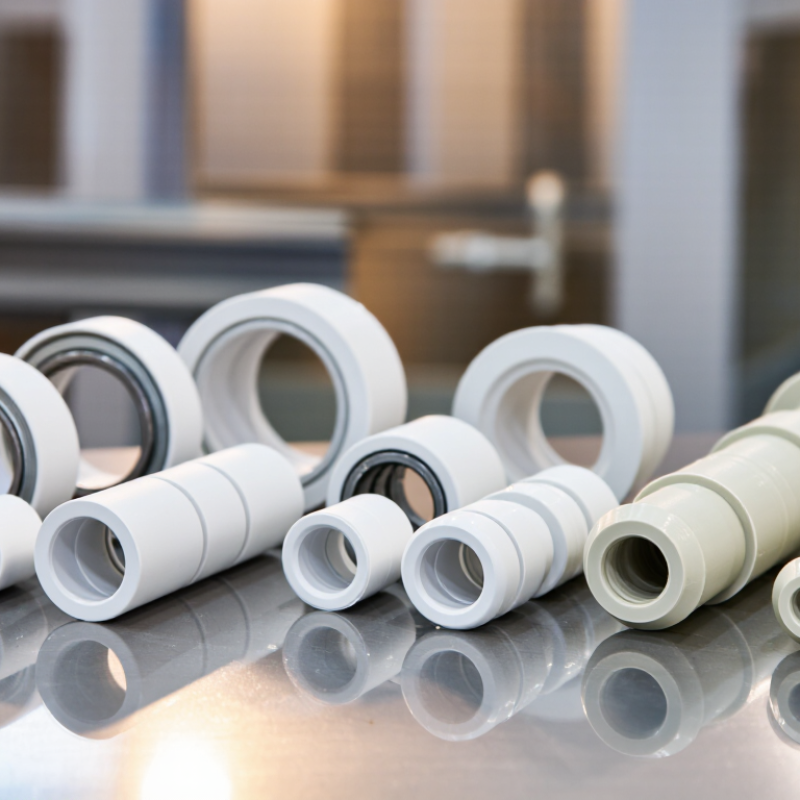
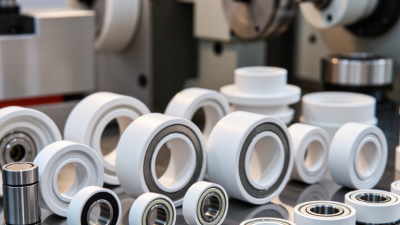
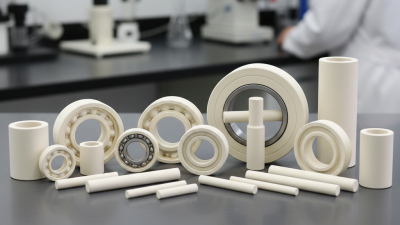
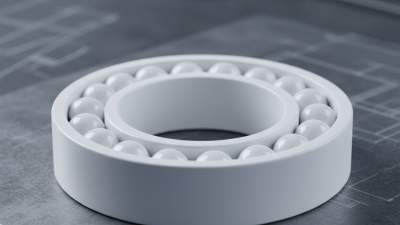
Alumina ceramic bearings use aluminum oxide for rolling elements, raceways, or both. Their hard, electrically insulating surfaces resist wear and many corrosive environments. They are often selected for equipment exposed to moisture, chemicals, or electrical currents. A bearing may contain ceramic balls with metal races, or use ceramic throughout. These designs are not interchangeable in every application. Load, speed, lubrication, and operating temperature all matter.
Alumina ceramic shafts are precision components that transmit rotation or support moving parts. Their low density and hardness can help reduce wear and moving mass. However, alumina is brittle compared with steel. A sharp impact or poor alignment may cause cracking, even when the surface looks undamaged. Manufacturing quality matters: straightness, diameter tolerance, and surface finish affect fit and vibration. Small differences can become noticeable at high speeds.
Tips: Match the ceramic grade and bearing design to the actual operating conditions. Check load, shaft fit, temperature, and lubrication before specifying parts. Ask suppliers for material and dimensional inspection data. Do not assume “ceramic” means maintenance-free; that assumption can be misleading. Regularly inspect for chips, unusual noise, or changing vibration.
| Topic | Product or specification | Typical information | What to check when sourcing |
|---|---|---|---|
| What they are | Alumina ceramic bearing | A bearing component, such as a ball, roller, race, or sleeve, made from aluminum oxide (Al₂O₃). Designs may be all-ceramic or combine ceramic rolling elements with other materials. | Confirm which parts are ceramic, the bearing arrangement, dimensions, and whether the design suits the load, speed, and operating environment. |
| What they are | Alumina ceramic shaft | A rotating or stationary shaft made from alumina ceramic. It is used where electrical insulation, wear resistance, or resistance to many chemical environments is required. | Specify the drawing, shaft-end features, fit, surface finish, straightness, and allowable runout. These are order-specific rather than universal values. |
| Material | High-purity alumina | Commercial ceramic grades commonly contain about 95% to 99.9% alumina. Higher-purity grades are available; exact composition and properties depend on grade and manufacturing process. | Request the grade, alumina content, applicable material standard, and a material certificate for the offered batch. |
| Typical material property | Density | Approximately 3.7–3.9 g/cm³ for many dense alumina grades. | Compare the supplier’s stated value with the specified grade and test method; density alone does not establish finished-part quality. |
| Typical material property | Vickers hardness | Often around 1,500–1,800 HV for dense technical alumina, depending on composition and test conditions. | Ask for the test load and method as well as the reported hardness value. |
| Typical material property | Flexural strength | Often approximately 300–400 MPa for high-purity dense alumina. Actual strength varies with grade, geometry, surface condition, and test method. | Design for ceramic brittleness: check impact risk, stress concentration, and the supplier’s strength data for the relevant grade. |
| Typical material property | Thermal conductivity | Commonly about 20–30 W/(m·K) near room temperature for many dense alumina grades; the value depends on purity and temperature. | Confirm operating temperature and thermal-gradient conditions for the intended assembly. |
| Typical material property | Electrical behavior | Alumina is an electrical insulator under suitable conditions. Insulation performance depends on grade, temperature, moisture, and test conditions. | For electrical applications, specify the required dielectric properties and request test data under relevant conditions. |
| Performance consideration | Wear and chemical exposure | Alumina is hard and wear-resistant, and it resists many chemicals. It is not universally corrosion-proof; strong acids, alkalis, and process conditions must be evaluated individually. | Provide the chemical name, concentration, temperature, and exposure duration for compatibility review. |
| Performance consideration | Friction and lubrication | Friction is not a single fixed material value. It depends on the counterface, surface finish, load, speed, temperature, and whether lubrication is used. | Ask for application-specific test results or a technical recommendation for the proposed bearing pairing and lubrication regime. |
| Supplier capability | Manufacturing and finishing | Relevant processes may include ceramic powder forming, sintering, grinding, lapping, and dimensional inspection. | Check which processes are performed in-house, available part sizes, drawing-review capability, and inspection equipment. |
| Supplier capability | Quality documentation | Useful documentation can include dimensional inspection reports, material certificates, lot traceability, and a defined inspection plan. | Agree on sampling, critical dimensions, acceptance criteria, packaging, and documentation before production. |
| Note | Typical values are indicative | Property ranges are general reference values, not guaranteed specifications. Confirm the exact grade, test method, tolerances, and performance requirements with the supplier for each application. | |