Inquiry
Form loading...
Choosing reliable Alumina Ceramic Nozzles suppliers requires more than comparing catalogue prices. These components work under demanding conditions, including abrasive blasting, thermal processing, powder spraying, and precision fluid delivery. A nozzle may appear simple, yet its performance depends on alumina purity, density, bore accuracy, surface finish, and resistance to thermal shock. Small differences matter. A rough internal channel can disturb flow, while an uneven tip may shorten service life.
This guide examines ten notable suppliers worldwide through practical and transparent criteria. These include manufacturing experience, technical documentation, quality systems, customization capability, delivery support, and customer feedback. We also consider whether suppliers clearly explain material grades, tolerances, operating limits, and inspection methods. Details such as a polished 3-millimeter bore or a carefully finished shoulder can reveal production discipline. However, supplier information is not always complete. Websites may show impressive equipment without proving consistent batch quality. That limitation deserves attention.
The selected companies should be treated as informed starting points, not automatic recommendations. Buyers must match each supplier with their actual pressure, temperature, media, and replacement requirements. Independent testing remains valuable, especially for high-volume production. Ask for samples. Check the data.
Market rankings can change as well. New manufacturers may improve quickly, while established suppliers may vary across facilities or regions. For that reason, this overview balances available evidence with practical judgment. It aims to help engineers, procurement teams, and distributors make clearer decisions when sourcing durable Alumina Ceramic Nozzles for demanding industrial environments.
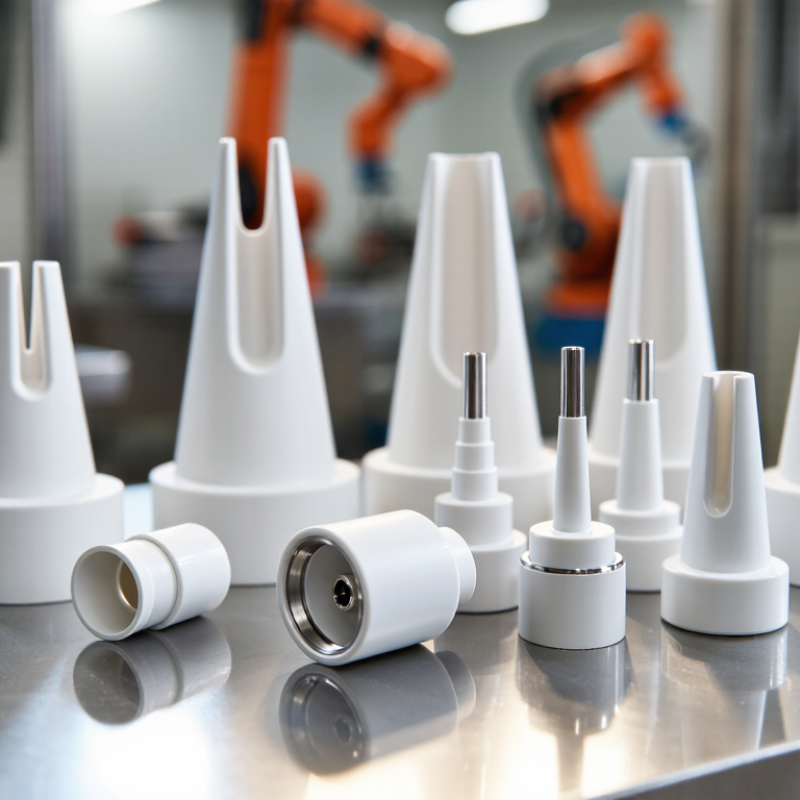
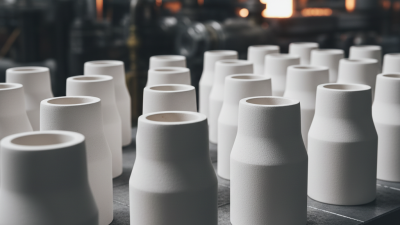
Alumina ceramic nozzles are precision components made from aluminum oxide, often containing 90–99.9% alumina. They resist abrasion, heat, corrosion, and electrical conduction. These properties support abrasive blasting, thermal spraying, laser processing, powder conveying, and industrial fluid atomization. A nozzle can face thousands of hours of particle impact, yet small design differences still matter.
The U.S. Geological Survey reported global alumina refinery production at roughly 140 million metric tons in 2023. This figure shows the scale of the raw-material industry, not nozzle demand. A 2024 market analysis by Grand View Research also identified ceramics as a growing material group for high-temperature and wear-resistant applications. In practice, engineers select nozzle suppliers by checking purity, inner-bore geometry, hardness, thermal-shock resistance, and inspection records. Supplier rankings can change quickly. Price alone is a weak filter.
Tips: Match the ceramic grade to the process temperature and abrasive type. Measure the inlet, outlet, and spray angle before ordering replacements. Request dimensional reports and batch traceability. Do not assume higher alumina purity always performs better; thermal shock, mounting stress, and operator technique may control service life. Field testing remains necessary, even when laboratory data looks convincing.
| Profile | Primary Manufacturing Region | Typical Alumina Purity | Common Nozzle Forms | Typical Maximum Service Temperature | Typical Production Capability | Common End-Use Industries | Typical Quality Documentation |
|---|---|---|---|---|---|---|---|
| 01 | East Asia | 95%–99.8% Al₂O₃ | Straight-bore, converging, venturi, and custom orifices | 1,500–1,800°C, design dependent | High-volume pressed and injection-molded parts | Abrasive blasting, thermal spraying, welding, and powder handling | Dimensional inspection, material certificate, and batch traceability |
| 02 | Central Europe | 96%–99.7% Al₂O₃ | Precision jet nozzles, atomizing tips, and metering inserts | 1,400–1,750°C, depending on thermal shock and mounting | Tight-tolerance machining and grinding after sintering | Chemical processing, laboratory equipment, and coating systems | Inspection reports, surface-finish data, and dimensional drawings |
| 03 | North America | 95%–99.9% Al₂O₃ | Blast nozzles, burner components, and custom flow restrictors | 1,500–1,800°C in non-pressurized service | Prototype-to-low-volume custom production | Oil and gas, foundries, aerospace maintenance, and surface preparation | Material traceability, non-destructive inspection, and compliance records |
| 04 | Japan and South Korea | 99.5%–99.99% Al₂O₃ | Micro-nozzles, precision dispensing tips, and plasma-spray parts | 1,600–1,800°C, subject to geometry and thermal cycling | Fine-grain ceramic processing with precision finishing | Semiconductor equipment, electronics, medical devices, and optics | Particle-control data, micro-dimension inspection, and cleanliness records |
| 05 | India and South Asia | 92%–99.5% Al₂O₃ | Welding, furnace, burner, and abrasive-flow nozzles | 1,400–1,750°C, depending on installation conditions | Standardized parts and medium-volume custom orders | Metal fabrication, heat treatment, ceramics, and industrial maintenance | Chemical composition data, dimensional checks, and visual inspection |
| 06 | Western Europe | 99.0%–99.9% Al₂O₃ | Spray-drying nozzles, kiln components, and high-wear inserts | 1,500–1,800°C, depending on thermal gradients | Engineering-grade custom components with controlled tolerances | Advanced ceramics, pharmaceuticals, food processing, and powder production | Quality management records, material certificates, and process validation |
| 07 | Southeast Asia | 95%–99.8% Al₂O₃ | Air-blast, liquid-spray, and general-purpose process nozzles | 1,400–1,700°C, depending on operating atmosphere | Cost-effective repeat production and replacement parts | General manufacturing, environmental equipment, and process automation | Lot identification, dimensional inspection, and product specification sheets |
| 08 | Taiwan and Coastal China | 99.0%–99.99% Al₂O₃ | Small-bore nozzles, dispensing tips, and insulation components | 1,500–1,800°C, subject to thermal shock limits | Automated forming, CNC grinding, and repeatable small parts | Electronics, battery manufacturing, laboratory systems, and automation | Dimensional capability studies, cleanliness checks, and batch records |
| 09 | Middle East and North Africa | 95%–99.5% Al₂O₃ | Abrasive blasting, burner, and high-temperature transfer nozzles | 1,400–1,750°C, depending on fuel, pressure, and mounting | Industrial replacement parts and application-specific fabrication | Oil and gas, cement, steel, mining, and thermal processing | Inspection certificates, material data, and service-condition review |
| 10 | Australia and Oceania | 95%–99.8% Al₂O₃ | Mining, abrasive-transfer, burner, and wear-resistant nozzles | 1,400–1,750°C, depending on thermal cycling and atmosphere | Application engineering, replacement parts, and specialty orders | Mining, mineral processing, energy, and industrial maintenance | Material certificates, wear-performance records, and dimensional reports |