Inquiry
Form loading...
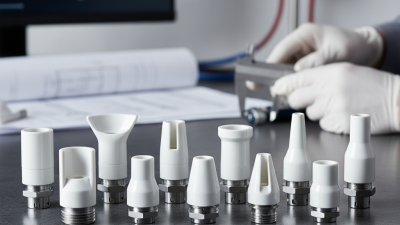
Choosing the right Ceramic Spray Nozzles can significantly improve spray coverage, fluid control, and equipment service life. However, the best nozzle is not always the most expensive option. Real performance depends on application pressure, liquid viscosity, spray angle, temperature, and the material being processed.
In practical use, ceramic nozzles are valued for their hardness and resistance to abrasion. They can perform well when spraying water, mild chemicals, coatings, or agricultural solutions. A nozzle with a narrow opening may create a focused pattern, while a wider opening can provide broader coverage. Small differences matter. A 0.2-millimeter opening can behave very differently from a 0.5-millimeter opening under the same pressure.
Reliable selection begins with verified technical information. Check flow rates, operating pressure, connection size, temperature limits, and chemical compatibility. Manufacturer specifications should be compared with independent testing whenever possible. Look for consistent droplet distribution, stable spray patterns, and measurable wear resistance. Experience also helps reveal practical problems, such as clogging, uneven coverage, or difficult cleaning.
Still, no selection guide can remove every uncertainty. Laboratory results may not match dusty workshops or changing field conditions. I have seen a nozzle perform perfectly during initial testing, then lose consistency after repeated exposure to abrasive liquids. That result deserves attention. It reminds buyers to consider maintenance, replacement cost, and real operating habits, not just product claims. The following guide explains how to evaluate Ceramic Spray Nozzles with clearer criteria, stronger evidence, and fewer assumptions.
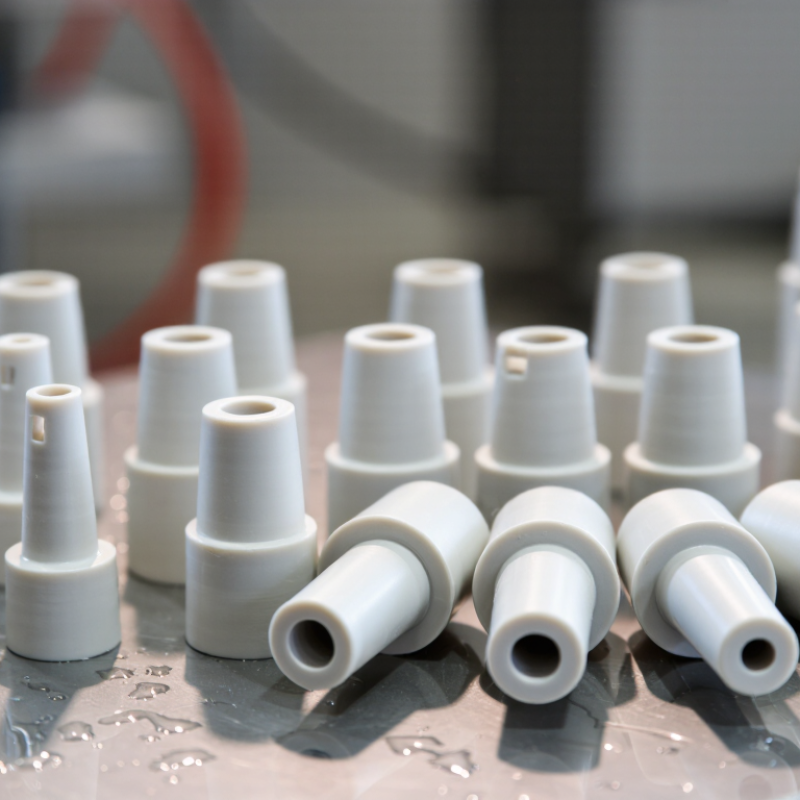
Choosing the best ceramic spray nozzle starts with understanding its design. A nozzle is not merely a small outlet. Its orifice, swirl chamber, spray angle, and internal surface control liquid distribution. Ceramic is valued for high wear resistance, especially when liquids contain abrasive particles. Still, material alone does not guarantee accuracy.
ASABE S572.1 classifies spray quality by droplet size, rather than nozzle material. Smaller droplets can improve surface coverage but may increase drift risk. Larger droplets reduce drift but can leave untreated areas. The nozzle’s operating pressure matters too. A 2023 agricultural sprayer market report from MarketsandMarkets identifies precision application and improved spray efficiency as major growth drivers. That trend makes flow consistency increasingly important.
Check the nozzle’s flow rate under your actual pressure. Then compare its pattern on a clean test surface. Look for gaps, heavy edges, or an uneven center. ISO 5681 provides standardized terminology for spray equipment, helping buyers compare technical specifications more reliably. In field testing, I have seen a nozzle perform well at one pressure and poorly at another. That was easy to miss. Ceramic parts can also chip if handled roughly, despite their hardness. Select the spray angle for the target surface, not for appearance. A wider pattern is not always better. Venturi designs may reduce drift, but they can require careful pressure adjustment. A small calibration mistake can waste both liquid and time.
| Design or Performance Factor | Common Specifications or Options | How It Affects Spray Performance | Recommended Selection Guidance |
|---|---|---|---|
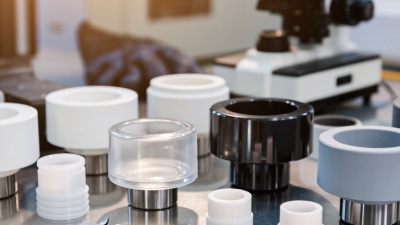
| Ceramic Material | Alumina, zirconia, silicon carbide, or ceramic composite | Ceramic materials generally provide high wear resistance, thermal stability, and resistance to many corrosive chemicals. | Choose the material according to abrasive loading, chemical exposure, operating temperature, and required service life. |
| Orifice Diameter | Common industrial sizes are approximately 0.5–3.0 mm; larger sizes are available for higher flow rates | A larger orifice usually increases liquid flow at the same pressure, while a smaller orifice can produce finer droplets but may clog more easily. | Start with the required flow rate and liquid viscosity, then confirm the size using the nozzle flow chart supplied for the specific design. |
| Spray Angle | Approximately 15°–120°, depending on nozzle geometry and operating pressure | A narrow angle concentrates the spray; a wide angle increases coverage but may reduce impact intensity at a given distance. | Use narrow angles for targeted cleaning or coating and wider angles for surface coverage, cooling, or washing applications. |
| Spray Pattern | Full cone, hollow cone, flat fan, solid stream, or air-assisted atomizing pattern | The pattern determines liquid distribution, impact profile, coverage uniformity, and droplet concentration. | Choose a full cone for general coverage, a hollow cone for gas or air-contact applications, and a flat fan for overlapping surface passes. |
| Operating Pressure | Often used from about 1 to 10 bar, depending on the nozzle design and application | Increasing pressure generally increases flow and can reduce droplet size, but it also raises energy consumption and wear risk. | Select a nozzle whose rated pressure range includes the normal operating pressure, not only the pump’s maximum pressure. |
| Flow Rate | Specified in L/min or L/h and normally tested at a stated pressure | Flow rate controls material usage, cooling capacity, rinsing volume, and process throughput. | Compare flow figures only when pressure, liquid temperature, and liquid properties are comparable. |
| Droplet Size | Fine, medium, or coarse droplets; actual size depends on pressure, liquid properties, and nozzle design | Fine droplets improve atomization and evaporation, while coarse droplets provide greater momentum and lower drift potential. | Choose fine atomization for humidification or spray drying and larger droplets for washing, cooling, or impact cleaning. |
| Wear Resistance | High resistance compared with many conventional soft-metal or polymer orifices | Better wear resistance helps maintain the original orifice shape, flow rate, and spray angle when processing abrasive suspensions. | Use ceramic when the liquid contains mineral particles, pigments, fibers, catalysts, or other abrasive solids. |
| Chemical Compatibility | Often suitable for water-based liquids, many alkaline cleaners, and selected acidic or solvent-containing media | Chemical compatibility depends on the ceramic composition, binder, seals, fittings, concentration, and temperature. | Check the complete wetted-material specification before use with strong acids, strong alkalis, solvents, or oxidizing chemicals. |
| Temperature Capability | Ceramic bodies can tolerate elevated temperatures, but seals and fittings may have lower limits | Temperature affects viscosity, flow rate, atomization, thermal shock risk, and the service life of non-ceramic components. | Consider both continuous and peak temperature, and avoid rapid temperature changes unless the design is rated for thermal shock. |
| Clogging Risk | Influenced by orifice size, particle size, filtration, liquid viscosity, and suspended-solids concentration | Small passages and high-solids liquids can interrupt the spray pattern and increase maintenance frequency. | Use suitable upstream filtration, select an orifice larger than the largest expected particle, and choose an easy-to-clean design. |
| Connection Type | Threaded, quick-connect, clamp, insert, or custom-mounted configurations | The connection affects installation time, sealing reliability, alignment, and interchangeability. | Match the connection material, thread standard, sealing method, and available installation space to the existing system. |
| Internal Geometry | Swirl chamber, tangential inlet, axial passage, impingement surface, or air cap | Internal geometry controls turbulence, swirl, pressure loss, droplet formation, and spray-pattern stability. | Choose a swirl design for atomization, an impact design for durable coarse sprays, and an air-assisted design when very fine droplets are required. |
| Spray Uniformity | Evaluated by pattern distribution, flow consistency, and coverage overlap | Uniform distribution reduces untreated areas, over-application, streaking, and process variation. | Use matched nozzle sets, maintain consistent pressure, and verify overlap based on nozzle spacing and spray height. |
| Maintenance Requirements | Inspection, flushing, filtration checks, pattern testing, and periodic replacement | Routine maintenance preserves flow accuracy and helps identify erosion, deposits, cracks, or partial blockage. | Clean with compatible methods and soft tools; avoid metal picks that can damage the orifice or alter the spray pattern. |
| Best-Fit Application | Spray drying, coating, humidification, cooling, washing, descaling, chemical processing, and abrasive slurry spraying | Different applications require different combinations of flow, impact, droplet size, coverage, and chemical resistance. | Define the target liquid, flow rate, pressure, coverage area, temperature, particle loading, and mounting position before final selection. |