Inquiry
Form loading...

Why Choose Ceramic Spray Nozzles for Industrial Use?

Industrial spray nozzles work in demanding conditions: hot liquids, abrasive particles, and repeated cleaning can wear down critical surfaces. Ceramic Spray Nozzles are often considered where wear resistance and dimensional stability matter. But ceramic is not a universal fix. The right choice depends on the fluid, pressure, temperature, and required spray pattern.

The scale of equipment durability challenges is reflected in the NACE International IMPACT study, which estimated the global cost of corrosion at US$2.5 trillion, or 3.4% of global GDP. That figure covers many industries and assets; it does not measure nozzle costs or prove that ceramic nozzles eliminate corrosion. It does show why material selection deserves careful attention. In practice, engineers compare nozzle life, flow consistency, clogging risk, and replacement effort—not material claims alone. A ceramic tip may resist abrasion well, yet a poor fit for the process can still chip or produce an uneven spray. Small details matter. This guide explores how ceramic nozzles perform, where they can offer value, and what to check before specifying them. Some trade-offs are easy to miss. A test under actual operating conditions remains the soundest basis for a decision.
Why Choose Ceramic Spray Nozzles for Industrial Use?

What Ceramic Spray Nozzles Are and How They Work

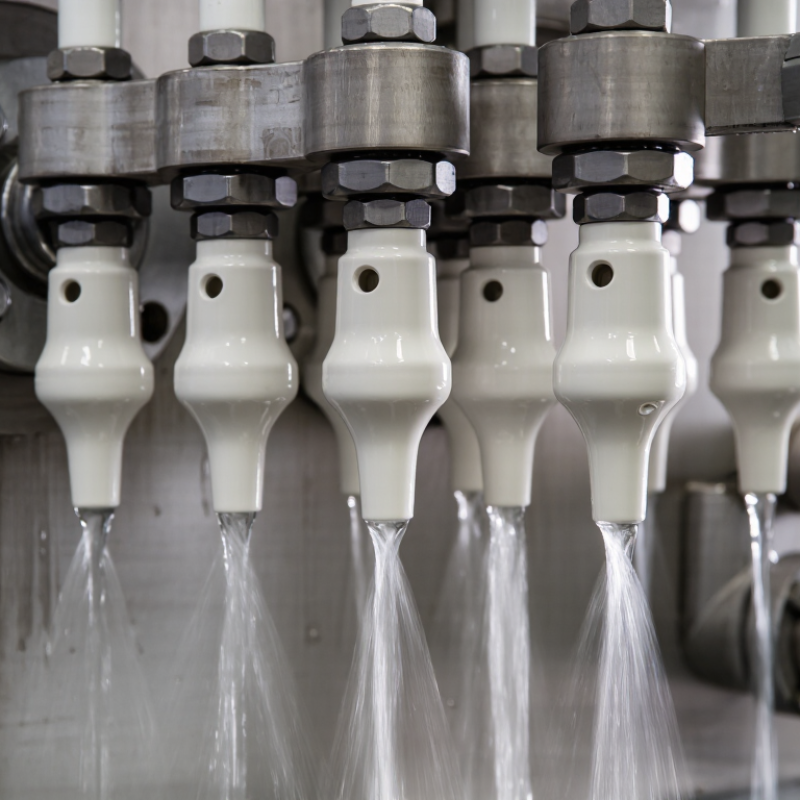
A ceramic spray nozzle is a shaped flow passage, usually made from alumina or another technical ceramic. Liquid enters under pressure, passes through a small orifice, and exits as a jet or a fan-shaped spray. The orifice geometry and operating pressure determine the spray pattern and droplet size. Small opening. Focused flow. Ceramic matters because abrasive particles can gradually enlarge softer nozzle openings, changing flow and coverage. MatWeb’s material-property listings for 99.5% alumina give a density near 3.9 g/cm³ and Vickers hardness around 1,500 HV; actual values vary by grade and test method.

In industrial service, this hardness can help resist abrasive wear in coating, cooling, and cleaning applications. It does not make the nozzle indestructible. Ceramics are brittle, so a dropped nozzle or sudden thermal shock can cause chips or cracks. A tiny defect at the lip may distort the spray before it is obvious. I would not choose by material alone: check fluid chemistry, particle size, pressure, temperature changes, and the required spray angle. Those details are easy to underestimate.

Tips: Inspect the orifice under bright light and compare its spray pattern with a clean baseline. Avoid probing it with metal wire; scratching or chipping the edge can alter the flow. Record pressure and flow during checks, since a stable-looking spray can still deliver an inconsistent rate.

Why Choose Ceramic Spray Nozzles for Industrial Use? — What Ceramic Spray Nozzles Are and How They Work
Dimension Typical Characteristic How It Works or Why It Matters Practical Selection Consideration
Definition A spray nozzle with a ceramic flow-control or wear surface, commonly made from alumina, silicon carbide, or zirconia. Pressurized liquid passes through an inlet and a shaped orifice, which controls the flow and forms a spray pattern. Check which nozzle components are ceramic; some designs use ceramic inserts in a metal body.
Flow and spray formation Orifice geometry determines the nominal flow rate, spray angle, and pattern, such as full cone, hollow cone, or flat fan. Liquid pressure and the internal passage shape convert the incoming stream into droplets or a directed sheet. Compare performance at the specified operating pressure and liquid conditions; pattern and flow vary by design.
Abrasion resistance Many technical ceramics are hard and resist wear from suspended particles better than many common nozzle metals. Reduced orifice wear can help a nozzle maintain its intended flow and spray pattern over time. Service life depends on particle size, concentration, velocity, ceramic grade, and system conditions.
Corrosion resistance Ceramic materials can resist many corrosive liquids, but resistance varies by composition and chemical environment. A chemically compatible wetted surface can reduce material attack and help preserve the nozzle opening. Confirm compatibility with the exact chemical, concentration, temperature, and exposure time.
Temperature performance Many technical ceramics retain useful properties at elevated temperatures, with limits that depend on grade and design. Thermal stability can make ceramic components suitable for some hot-process or temperature-cycling duties. Assess thermal shock, temperature changes, mounting stresses, and the full assembly—not just the ceramic material.
Dimensional stability Hard, wear-resistant ceramic orifices can help maintain their geometry during demanding service. A more stable opening supports consistent flow and spray performance when wear is a primary failure mode. Actual consistency also depends on manufacturing tolerances, clogging, pressure, and maintenance.
Mechanical trade-off Technical ceramics are generally hard but can be brittle and sensitive to impact or edge damage. The material’s hardness helps resist abrasion, while its brittleness makes handling and installation important. Avoid impact and overtightening; use suitable supports and follow the nozzle maker’s installation guidance.
Common industrial uses Applications include spray drying, surface treatment, dust suppression, cleaning, and process spraying. Ceramic nozzles are considered where wear, chemical exposure, or operating temperature challenges nozzle life. Select by required flow, pressure, spray pattern, liquid properties, and process conditions—not by material alone.
Maintenance check Inspect the orifice and spray pattern for deposits, chips, uneven wear, or changes in flow. Blockage or damage can alter droplet formation, coverage, and liquid delivery. Use cleaning methods appropriate to the ceramic and process; replace damaged components rather than forcing them clean.

How Ceramic Materials Influence Nozzle Performance

Ceramic spray nozzles are often selected for abrasive or chemically demanding processes, but the material alone does not determine performance. Nozzle geometry, operating pressure, and fluid cleanliness matter too. In a slurry line carrying fine silica, hard ceramic surfaces can resist wear better than many metals, helping the spray pattern remain consistent over time. Small changes matter: a worn orifice may produce uneven coverage and larger droplets.

Ceramics are hard and can offer useful resistance to corrosion, depending on the specific composition and process fluid. That distinction matters. “Ceramic” covers several materials, and compatibility should be checked against the actual chemicals, temperature, and cleaning routine. A ceramic nozzle may also tolerate heat well, yet sudden temperature changes can cause cracking. Hardness has a trade-off.

Installation deserves attention. A nozzle can chip if dropped onto a concrete floor or tightened unevenly in its fitting. Check the supplier’s material data, flow-rate information, and recommended pressure range before specifying one. Then inspect the spray pattern under normal operating conditions. It is tempting to assume ceramic will simply last longer; real service records may tell a less tidy story.

Key Benefits of Ceramic Spray Nozzles in Industry

Ceramic spray nozzles are valued for resisting abrasion in demanding industrial processes. When a line carries mineral slurry, fine particles can gradually enlarge a metal nozzle’s orifice. A ceramic nozzle may retain its opening longer, helping maintain a more consistent spray pattern and droplet size. That matters in coating, cleaning, and cooling, where uneven coverage can waste material or leave visible streaks. Less frequent replacement can also reduce maintenance interruptions.

Ceramics can tolerate many corrosive liquids and elevated operating temperatures, but performance depends on the specific ceramic and process conditions. Check chemical compatibility, pressure, and flow rate before selecting a nozzle. Small details matter. A poorly matched orifice can create excessive pressure loss or an uneven spray, even with a durable material. Ceramic is not magic. It can be brittle, so a dropped nozzle or rough installation may cause chips that affect spray quality. Inspect the orifice during routine maintenance; a hairline defect may be easy to miss. In practice, comparing spray patterns under actual operating conditions is more useful than relying on material claims alone.

Industrial Processes That Use Ceramic Spray Nozzles

In chemical processing, ceramic spray nozzles apply coatings, wash vessels, and distribute liquids in corrosive environments. Their precise orifices help produce consistent spray patterns, which matters when a line must wet a surface evenly. Ceramic components can resist abrasion and many chemicals, but suitability depends on the specific material, liquid, temperature, and operating pressure.

Tiny openings matter. Deposits or wear can change the spray shape and reduce process consistency, so operators inspect flow and nozzle condition during routine maintenance.

Wastewater plants use ceramic nozzles in scrubbers and spray systems that control dust or wash process gases. Metalworking and steel operations may use them to cool or rinse equipment exposed to abrasive particles and heat. Paper mills also use spray systems to clean fabrics and remove residue from production surfaces. Each application has different demands; a nozzle that performs well in a wash-down line may not suit a high-pressure cooling circuit. Not always. Ceramic can be hard and wear-resistant, yet it may chip under impact or poor installation. In practice, checking the liquid chemistry, spray angle, flow rate, and mounting alignment is just as important as choosing a durable nozzle material.

How to Select and Maintain a Ceramic Spray Nozzle

Why Choose Ceramic Spray Nozzles for Industrial Use?

How to Select and Maintain a Ceramic Spray Nozzle

Ceramic spray nozzles can suit abrasive or corrosive processes where metal tips wear quickly. Their hardness helps preserve the spray shape, but ceramic is brittle. A dropped nozzle may chip even when the damage is hard to see. Looks can mislead. Choose a nozzle by considering the liquid, operating pressure, temperature, required flow rate, and spray pattern. Check chemical compatibility with an equipment specialist, and confirm the orifice size against process requirements. No single ceramic grade fits every application.

Before installation, inspect the orifice under bright light for cracks or deposits. Use the specified gasket and tighten evenly; excessive force can damage the nozzle. Record pressure and flow during commissioning. Those readings provide a useful baseline for spotting wear or blockage. For routine cleaning, flush with a compatible liquid and use a soft brush or nonmetallic tool. Avoid wires and abrasive picks, which can scratch the orifice and alter the spray pattern.

Tips: Compare the spray pattern with a clean reference, not just the nozzle’s appearance. If flow changes, check filters and upstream pressure before replacing the tip. Keep a spare with matching specifications. It is easy to blame the nozzle when the real cause is elsewhere.

Why Choose Ceramic Spray Nozzles for Industrial Use?

Typical Mohs hardness of ceramic materials used in industrial nozzles

Ceramic nozzle materials are hard and can resist abrasive wear. Mohs hardness is a comparative scale, not a direct measure of nozzle life; actual performance depends on material grade, fluid chemistry, pressure, and operating conditions. Select a material for the application, and routinely inspect the orifice for wear or blockage and flush it during maintenance.

Approximate typical Mohs values; specific grades may vary.