Inquiry
Form loading...

Top 10 Alumina Ceramic Parts You Need to Know About?

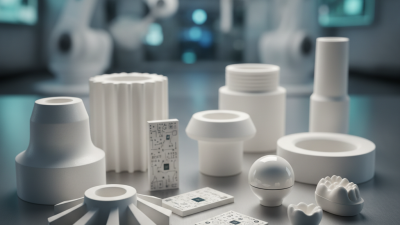
Alumina Ceramic Parts are integral in various industries. Their unique properties, such as high hardness and excellent wear resistance, make them invaluable. For engineers and manufacturers, understanding these parts is crucial. They offer solutions in automotive, aerospace, and electronics.

These materials excel in extreme conditions. They withstand high temperatures and corrosive environments. However, not all alumina ceramic parts are created equal. Quality can vary significantly among suppliers, leading to performance issues. This is a common oversight in the industry.

In the following sections, we will explore ten essential alumina ceramic parts. Each part plays a specific role in different applications. This knowledge is essential for making informed purchasing decisions. Let's dive into the details and highlight what sets these parts apart in today's market.
Top 10 Alumina Ceramic Parts You Need to Know About?

Top 10 Applications of Alumina Ceramic Parts in Modern Industries

Alumina ceramics are vital in various industrial applications due to their outstanding properties. In electronics, they provide insulating components. Their high thermal stability makes them perfect for substrates in circuits. Additionally, their wear resistance is critical in manufacturing equipment. They protect machinery from damage and reduce maintenance costs.

In the medical field, alumina ceramics play a significant role. They are used for prosthetics and dental implants. Their biocompatibility ensures safety in the human body. The precision in their manufacturing is essential to meet strict medical standards. Furthermore, they find utility in cutting tools due to hardness. This offers enhanced performance in machining processes.

Even with the many benefits, challenges exist. The brittleness of alumina ceramics can lead to failures under stress. Proper design and material selection are crucial to mitigate these risks. Continuous research is necessary to improve their mechanical properties. Enhancing their toughness could broaden their applications. The future lies in better materials and innovative uses.


Key Properties of Alumina Ceramics: Strength, Hardness, and Thermal Resistance

Alumina ceramics are renowned for their impressive key properties, particularly strength, hardness, and thermal resistance. These materials exhibit a bend strength that often exceeds 400 MPa. This remarkable strength allows alumina ceramics to withstand complex mechanical stresses in harsh environments. According to research from the International Journal of Advanced Manufacturing Technology, alumina's strength is approximately 30% higher than that of traditional materials used in various industrial applications.

The hardness of alumina ceramics is another defining feature. They typically score between 8 to 9 on the Mohs scale. This makes them ideal for applications requiring wear resistance. An industry study demonstrated that alumina components outperformed other materials in abrasive environments, lasting up to twice as long. This durability translates into reduced maintenance costs and extended service life for critical components.

Thermal resistance is critical in many applications where high temperatures prevail. Alumina ceramics maintain stability at temperatures up to 1,600 degrees Celsius. This ability helps prevent structural degradation and maintains performance under extreme conditions. However, it's essential to acknowledge that despite these strengths, alumina ceramics can be brittle. This brittleness may lead to catastrophic failures if not properly managed. Careful design and application are crucial to avoid issues associated with their inherent weaknesses.

Top 10 Alumina Ceramic Parts You Need to Know About

Part Name Key Properties Applications Typical Dimensions (mm)
Alumina Rods High Strength, High Hardness, Good Thermal Resistance Electrical Insulators, Supports 5 to 50
Alumina Plates High Density, Excellent Wear Resistance Wear Parts, Machine Components 10 to 100
Alumina Powder High Purity, Excellent Flow Properties Ceramic Manufacturing, Coatings < 1
Alumina Bearings Corrosion Resistant, High Hardness High-Speed Applications, Aerospace 5 to 20
Alumina Nozzles High Temperature Stability, Good Wear Resistance Spray Applications, Material Transport 3 to 15
Alumina Tubes High Strength, High Thermal Conductivity Insulation, Chemical Processing 10 to 200
Alumina Discs High Wear Resistance, Excellent Dielectric Properties Electrical Insulators, Spacers 5 to 50
Alumina Seals High Temperature Resistance, Chemical Stability Mechanical Seals, Pump Components 10 to 30
Alumina Insulating Parts Low Thermal Conductivity, High Insulating Properties Electrical and Thermal Insulation 5 to 100
Alumina Cutting Tools High Hardness, Wear Resistance Machining Applications, Precision Cutters 10 to 50

Comparative Analysis: Alumina vs. Other Ceramic Materials

Alumina ceramics are popular in various industries due to their strength and durability. When comparing alumina with other ceramic materials like zirconia or silicon carbide, several factors come into play. Alumina is known for its excellent wear resistance and high-temperature stability, making it suitable for aerospace and automotive applications. According to a recent industry report, the global alumina ceramics market size is projected to reach $3.5 billion by 2025.

In contrast, zirconia offers superior toughness but at a higher cost. While alumina has a hardness rating of 9 on the Mohs scale, zirconia ranks around 8.5, making alumina a prime choice for applications demanding hardness. However, zirconia's fracture toughness can be crucial in specific environments. These differences must be considered when selecting materials for specialized applications, as not all ceramics fit the same role.

Material selection can significantly impact performance and longevity. Keep in mind that while alumina may be the go-to for many uses, assessing the environment and mechanical stresses is essential. Different ceramics will react differently under high pressure or heat. Analyze the specific requirements of your application before settling on a material type. Remember, understanding the materials can lead to better product design and enhanced efficiency.

Manufacturing Processes for Alumina Ceramic Parts: Techniques and Innovations

Alumina ceramic parts are increasingly popular in various industries due to their unique properties. The manufacturing processes for these components have evolved significantly. Traditional methods such as pressing and sintering remain common. Yet, innovations like additive manufacturing are changing the landscape.

Additive manufacturing offers unprecedented design flexibility. Techniques like 3D printing allow for complex geometries that were difficult to produce before. However, the challenge lies in ensuring the physical properties of the final product match those of conventionally made ceramics. Engineers must experiment with different parameters to find the right balance. Material consistency is crucial, as variations can lead to performance issues.

In addition to 3D printing, slip casting is also a widely used technique. This process involves pouring a liquid clay mixture into molds. It can create intricate shapes with smooth surfaces. While this method has its advantages, it requires careful control of the slurry composition. Too much water can weaken the final part.

Each technique has its pros and cons, and understanding them is vital for successful production. Manufacturers must continually refine their processes to keep up with advancements in the field.

Market Trends: Growth of Alumina Ceramics in Aerospace and Electronics

Alumina ceramics are witnessing significant growth, particularly in the aerospace and electronics sectors. According to a recent market analysis, the global alumina ceramics market is projected to reach USD 5.2 billion by 2027, growing at a CAGR of 6.3% from 2020. This rise is driven by their lightweight nature and exceptional thermal stability. In aerospace, these properties make alumina ideal for components that must endure extreme conditions.

The need for reliable materials in electronics paves the way for increasing alumina ceramic adoption. High-purity alumina offers excellent insulation and resistance to wear, which encourages use in semiconductor devices and insulators. The electronics industry is expected to account for significant market share, potentially over 40% by 2025. However, challenges still exist. The production process can be costly and complex, impacting small to medium enterprises.

Despite these challenges, investments in R&D are crucial for innovation. Emerging applications continue to emerge, such as in biomedical devices and energy-efficient systems. This trend points toward a promising future for alumina ceramics but invites reflection. The industry must prioritize sustainability and cost-efficiency to support broader adoption.