How to Choose the Right Alumina Ceramic Nozzles for Your Applications?
Choosing the right Alumina Ceramic Nozzles is essential for many industrial applications. The performance of these components can significantly impact efficiency and output quality. According to the latest industry report from the Global Ceramic Nozzle Association, the demand for high-performance nozzles has increased by 30% over the past two years. This surge emphasizes the need for careful selection based on specific application requirements.
Dr. Emily Tran, a renowned expert in ceramic materials, stated, “Selecting the right Alumina Ceramic Nozzles can make or break your operation.” Her insight highlights the gravity of this decision. Various factors play into this choice, including material properties, operating conditions, and design compatibility. The complexity of these factors often leads companies to overlook critical details, resulting in suboptimal performance.
It is evident that not all Alumina Ceramic Nozzles are created equal. Some may excel in thermal resistance while lacking in wear resistance. This duality often causes confusion. Companies should conduct thorough assessments, yet many rush this process, leading to costly mistakes. Investing time in this selection process can pay off with increased durability and productivity.
Types of Alumina Ceramics and Their Properties
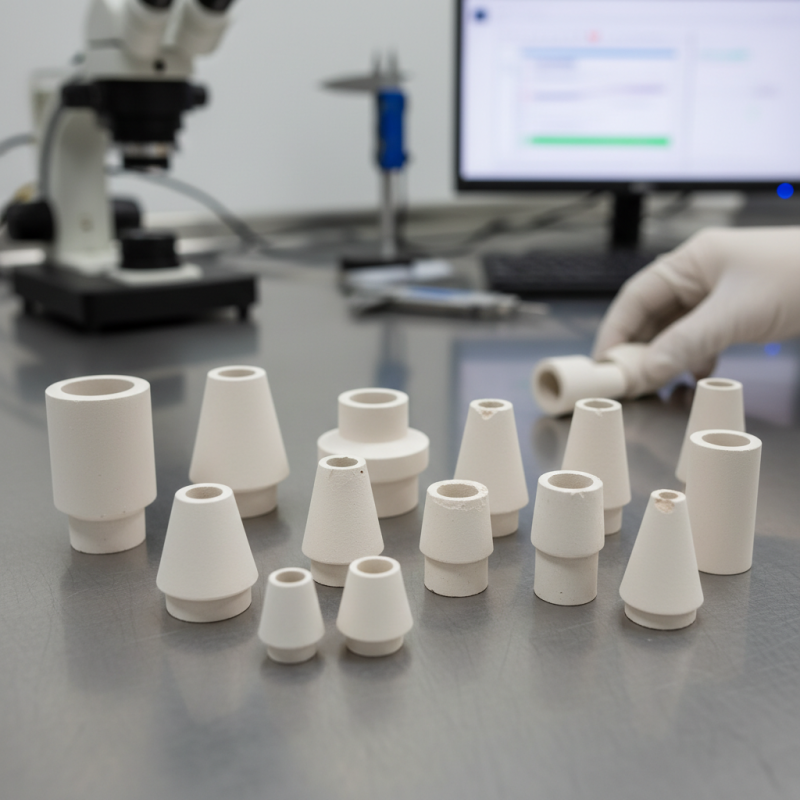
When selecting alumina ceramic nozzles, understanding the types and their properties is vital. Alumina ceramics vary in purity, typically ranging from 85% to 99.9%. Higher purity means improved wear resistance and better performance at high temperatures.
For instance, a high-purity alumina nozzle is ideal for applications involving corrosive fluids. It can handle extreme conditions without degrading. Conversely, a lower-purity option may suffice for less demanding tasks. However, using the wrong type can lead to premature failure. This is a common oversight that needs revisiting.
Tips: Always assess your specific application requirements. Consider the working environment, temperature, and pressure.
Another common misconception is that all alumina ceramics are the same. Different properties, like thermal conductivity and mechanical strength, can significantly impact performance. Sometimes, testing various options in the field reveals unexpected results. Testing helps in making informed decisions.
Tips: Don’t rush the selection process. It’s worthwhile to experiment with samples before committing to a bulk order.
Key Factors to Consider When Selecting Alumina Nozzles
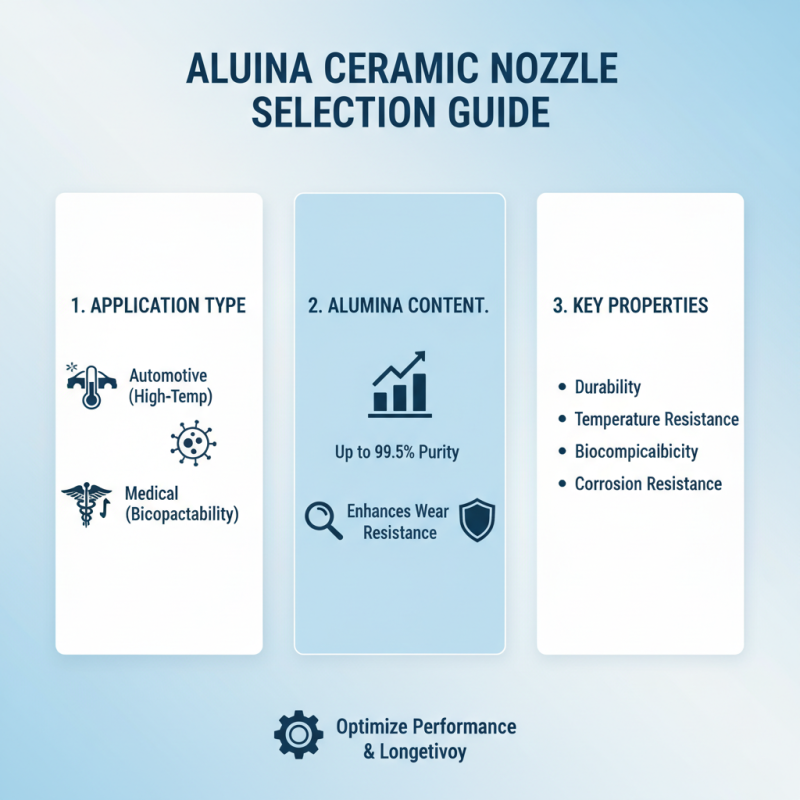
When selecting alumina ceramic nozzles, various factors come into play. The application type is crucial. Different industries require specific nozzle properties. For instance, nozzles used in the automotive sector may need high-temperature resistance, while those in the medical field might prioritize biocompatibility. The alumina content often affects durability. Pure alumina formulations can reach up to 99.5% purity. This level significantly enhances wear resistance.
Another critical factor is the nozzle's size and design. Standards vary by industry. A report from the Ceramic Manufacturers Association indicates that nozzle diameters can range from 0.5 mm to 10 mm, affecting flow rates. Smaller nozzles may improve precision but can clog more easily. The internal geometry can also influence material distribution. Smooth surfaces minimize turbulence and ensure uniform flow.
Performance under stress is essential. Alumina nozzles can withstand extreme temperatures exceeding 1,600°C. However, their brittleness can lead to failures in high-stress applications. Understanding the interplay between temperature, pressure, and material properties is vital. Data suggests that nearly 20% of failures in nozzle applications stem from incorrect material selection. This highlights the need for careful assessment and testing before finalizing a choice.
Application-Specific Requirements for Alumina Ceramic Nozzles
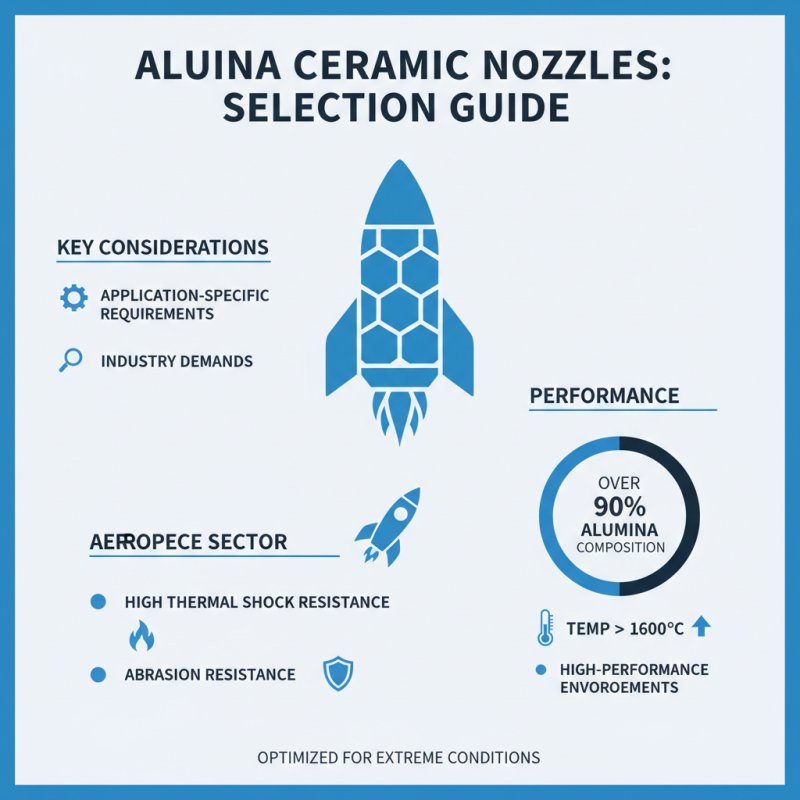
When selecting alumina ceramic nozzles, it's crucial to consider application-specific requirements. Different industries demand various properties. For instance, the aerospace sector often requires nozzles with high resistance to thermal shock and abrasion. Reports indicate that alumina compositions exceeding 90% can handle extreme temperatures over 1,600°C. This makes them suitable for high-performance environments.
In contrast, applications in the healthcare sector may prioritize biocompatibility. Here, alumina's chemical stability is vital, ensuring no leaching of harmful substances. A study shows that up to 99% purity alumina is commonly used in surgical tools. However, the challenge lies in balancing performance with cost-effectiveness.
Deciding on the right properties can be complex. Often, engineers face dilemmas regarding cost and functionality. For low-pressure fluid applications, standard alumina may suffice. Yet, high-stress environments may demand specialized formulations. This balancing act requires careful consideration and sometimes leads to trial and error in real-world conditions. The right choice of nozzle can significantly enhance process efficiency but requires informed decision-making.
Comparative Analysis of Alumina vs. Other Materials for Nozzles
When considering nozzle materials, alumina ceramic stands out for many applications. Its high wear resistance is impressive. Compared to metals, alumina offers a lightweight solution. This property helps reduce overall equipment weight. However, it may not conduct heat as effectively as some metals. In certain applications, this can be a drawback.
Other materials like stainless steel provide durability, but they can corrode over time. This is a crucial trade-off. Alumina's resistance to chemical reactions makes it preferable in corrosive environments. Yet, the brittleness of alumina can lead to unexpected breakage. It requires careful handling, which may not suit all working conditions.
The decision between alumina and other materials depends heavily on the specific application. Users must assess factors like temperature limits and operational pressure. While alumina ceramic is ideal in many cases, it isn't a one-size-fits-all solution. Finding the ideal balance between material properties and application needs is vital for performance.
Comparison of Alumina and Other Material Nozzles
Maintenance and Durability Considerations for Alumina Nozzles
Alumina ceramic nozzles are widely used in various industrial applications. Their longevity and performance are heavily influenced by maintenance. Regular inspections help identify early signs of wear. Look for chips or cracks that can affect the nozzle's function. Addressing issues promptly can prevent costly downtime and enhance operational efficiency.
Cleaning is an essential part of maintenance. Dust and debris can accumulate, affecting the nozzle's performance. Use soft brushes or air jets for thorough cleaning. Avoid harsh chemicals that can damage ceramic surfaces. It's easy to overlook this step, but neglecting it can lead to reduced efficiency.
Durability is another critical factor. While alumina nozzles are known for their strength, harsh operating conditions can shorten their lifespan. High temperatures or abrasive materials can take a toll. Always consider the specific conditions of your application. Are the nozzles exposed to extreme pressure or corrosive substances? Choosing the right material and regularly reviewing performance can save you time and money in the long run.
How to Choose the Right Alumina Ceramic Nozzles for Your Applications? - Maintenance and Durability Considerations for Alumina Nozzles
| Nozzle Type |
Alumina Content (%) |
Max Operating Temperature (°C) |
Hardness (Mohs) |
Durability (Cycles) |
Maintenance Frequency (Months) |
| Standard Nozzle |
95 |
1600 |
8 |
100,000 |
6 |
| High-Performance Nozzle |
98 |
1800 |
9 |
120,000 |
12 |
| Wear-Resistant Nozzle |
95 |
1500 |
8.5 |
90,000 |
8 |
| Chemical-Resistant Nozzle |
94 |
1400 |
7.5 |
80,000 |
10 |