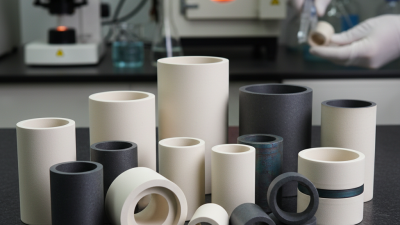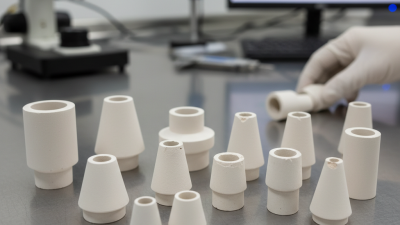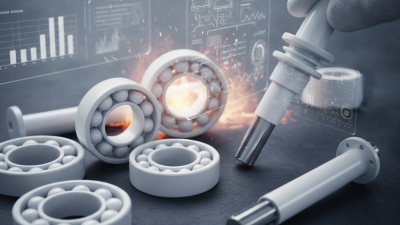
Choosing the best Alumina Ceramic Radial Bearing begins with the operating environment, not the product photograph. A bearing that performs quietly in a laboratory may fail beside abrasive dust, thermal cycling, or poor alignment. The correct choice depends on load, speed, temperature, lubrication, shaft material, and sealing conditions.
W. David Kingery, a leading ceramics researcher, wrote, “Ceramics are not simply materials; they are a technology.” That observation matters here. Alumina is hard, electrically insulating, corrosion resistant, and stable at elevated temperatures. However, it is not indestructible. Excessive shock, edge loading, or an unsuitable mating surface can create chips or premature wear.
Experienced engineers inspect the complete bearing system. They check radial load ratings, clearance, roundness, surface finish, cage design, and dimensional tolerance. They also ask how the bearing will be installed. A tight press fit can damage ceramic rings. A contaminated assembly can shorten service life within days.
There is no universal best option. That answer sounds unsatisfying, but it is accurate. A high-speed spindle may need precision grades and light preload. A chemical pump may need stronger corrosion resistance and nonmetallic components. A vacuum mechanism may require low-outgassing materials and minimal lubrication.
This guide explains how to compare these factors clearly. It also highlights common selection mistakes, including choosing hardness without considering fracture toughness. Real performance is often decided by small details: a rough shaft, a dirty housing, or one overlooked temperature cycle. Careful selection costs more time initially. It can prevent costly replacement later.
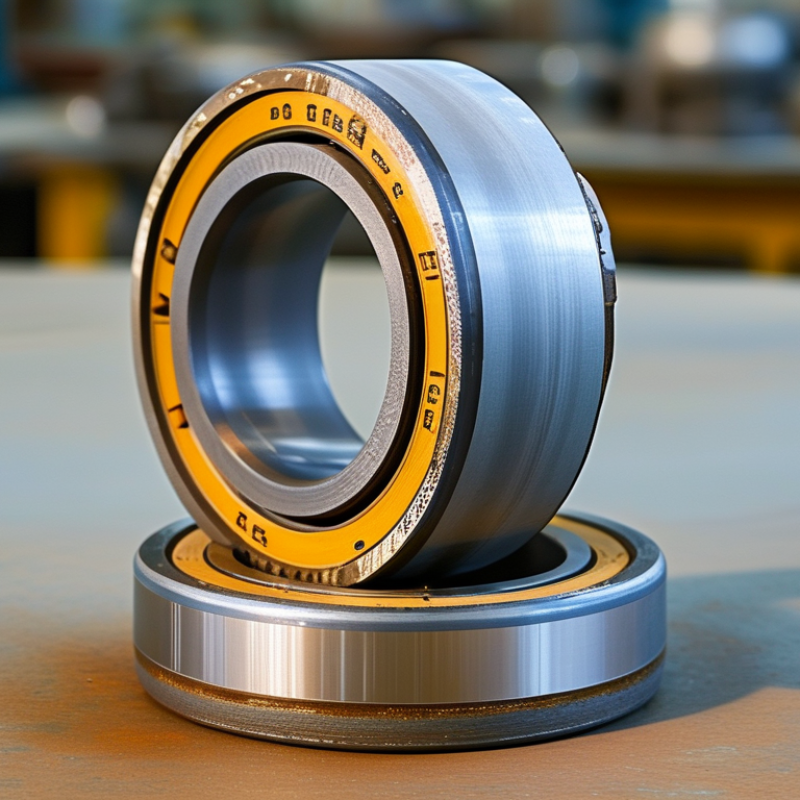
An alumina ceramic radial bearing is a bearing designed to carry loads perpendicular to its shaft. Its rings and rolling balls use aluminum oxide ceramic, often called alumina, instead of conventional steel. The cage may use polymer, ceramic, or another compatible material. This structure reduces metal contact and supports operation in electrically sensitive equipment.
Alumina is hard, electrically insulating, and resistant to many corrosive environments. ASM Handbook data lists typical alumina density near 3.8–3.9 g/cm³ and hardness around 1,500–2,000 HV, depending on purity and processing. It is not a perfect material. Alumina can be brittle, especially under shock loads or poor shaft alignment. Small mounting errors may create visible raceway damage.
The 2024 USGS Mineral Commodity Summaries reported global alumina production at roughly 140 million metric tons in 2023. This large production base supports stable material supply, but bearing performance still depends on grade and finishing quality. In practice, inspect the ceramic surfaces under bright light. A smooth, uniform raceway matters more than a generic “ceramic” label. Check radial load, speed, temperature, lubrication, and electrical conditions together. ISO 76:2006 provides a useful framework for static load rating, but it cannot replace application testing. That is where selection often becomes less certain.
Alumina selection begins with purity, hardness, and fracture toughness. Higher-purity alumina usually offers better wear resistance and chemical stability. However, hardness alone does not guarantee reliable bearing service. Alumina does not fail like steel. It chips. Check the bearing’s compressive strength when heavy radial loads or repeated impacts are expected. A polished raceway also matters because rough surfaces increase friction and accelerate contact damage.
Thermal behavior deserves close attention. Alumina has a low thermal expansion rate, which supports stable clearances across temperature changes. Its electrical insulation helps in motors, sensors, and other electrically sensitive assemblies. Thermal conductivity remains limited compared with metals, so heat may accumulate in poorly ventilated housings. Measure the operating temperature, shaft expansion, and housing fit together. Ignoring one of these details can create unexpected preload.
Chemical resistance is another practical advantage, especially around moisture, solvents, or corrosive vapors. Still, the cage, seals, lubricant, and mating rings may fail before the ceramic does. Select compatible materials, not just a ceramic ball grade. For high-speed operation, examine balance, dimensional tolerance, and surface finish. For shock-loaded equipment, consider whether alumina is too brittle. This is where selection becomes less perfect: a chemically excellent bearing may perform poorly under vibration. Test a sample under real load cycles before approving the final design.
How to Choose the Best Alumina Ceramic Radial Bearing?
How to Match Bearing Design with Operating Conditions?
Selecting an alumina ceramic radial bearing starts with the operating environment, not the catalog size. Measure radial load, rotational speed, temperature, humidity, and shaft diameter. A bearing exposed to abrasive dust needs tighter sealing than one working in a clean instrument housing. Small details matter.
Check the alumina grade, surface finish, internal clearance, cage material, and lubrication method. Alumina resists corrosion and provides electrical insulation, but it is less tolerant of impact than steel. A heavy press fit can create damaging stress. Use controlled fits and confirm shaft and housing tolerances through calculation. For high-speed service, balance low friction with adequate stiffness. Dry running may be suitable for short, clean cycles, but continuous operation often requires a compatible lubricant.
In practical testing, I would run the bearing under real load before approving the design. Record vibration, temperature rise, noise, and wear after repeated starts and stops. Do not trust speed ratings alone. Misalignment, thermal expansion, and contamination can change performance quickly. A slightly larger bearing is not always safer; it may increase friction and reduce system efficiency. The best match is the design that survives the actual duty cycle, including the awkward conditions engineers sometimes overlook.
| Operating Condition | Typical Requirement | Recommended Alumina Bearing Design | Key Selection Data | Design Considerations |
|---|---|---|---|---|
| Clean, dry, electrically insulating environment | Low contamination; electrical isolation is important | Full ceramic radial ball bearing with alumina rings and balls; non-metallic cage or shield where compatible | Alumina electrical resistivity is typically above 1014 Ω·cm at room temperature; dielectric strength commonly exceeds 10 kV/mm, depending on grade and test method | Use a clean, dry lubricant or a suitable solid-lubrication system. Electrical properties decrease as temperature and moisture increase. |
| High-temperature operation | Continuous exposure above the practical range of standard bearing steels | Open or shielded alumina bearing with a high-temperature cage, or a cage-free design for specially controlled applications | Alumina melting point is approximately 2,050 °C; practical bearing temperature is much lower and is usually limited by the cage, lubricant, seals, fits, and thermal gradients | Do not use the melting point as the bearing operating limit. Check thermal expansion, lubricant evaporation, cage strength, and radial clearance at the actual temperature. |
| Corrosive chemicals or humid atmosphere | Exposure to water, acids, alkalis, solvents, or process vapors | Sealed or shielded full ceramic bearing, selected after chemical compatibility testing | High-purity alumina is generally resistant to many corrosive media, but resistance depends on purity, porosity, temperature, concentration, and exposure time | The seal, cage, lubricant, and mounting hardware may fail before the alumina. Confirm compatibility for the complete bearing assembly. |
| Vacuum or cleanroom service | Low particle generation and low outgassing | Open full ceramic bearing with vacuum-compatible cage and lubricant, or a dry-running design qualified for the required pressure | Select materials with documented low outgassing; avoid ordinary greases and polymer components unless vacuum-rated | Dry ceramic-to-ceramic contact can generate wear debris. Validate friction, wear, heat generation, and service life at the target pressure. |
| High rotational speed | Low friction and controlled heat generation | Precision radial bearing with accurate raceway geometry, lightweight cage, optimized preload, and appropriate lubrication | Use the speed limit supplied for the exact bearing. A common preliminary metric is the speed factor n·dm, where n is rpm and dm is the mean bearing diameter in mm | Ceramic balls reduce centrifugal force because alumina density is about 3.7–3.9 g/cm3, but ring and cage limits still govern maximum speed. |
| Heavy radial load | High static or dynamic load with limited shock | Robust full ceramic bearing with increased ball complement only when raceway strength and lubrication permit; otherwise consider ceramic balls with hardened metallic rings | Calculate dynamic equivalent load P and static equivalent load P0; compare them with the bearing's rated capacities and required safety factor | Alumina has high hardness, typically about 1,500–2,000 HV, but lower fracture toughness than bearing steel. Avoid overload, edge loading, and sudden impacts. |
| Shock, vibration, or impact loading | Intermittent impact, shaft misalignment, or rapid load changes | Use a hybrid bearing or a more damage-tolerant bearing material unless testing proves that full alumina is suitable | Review fracture toughness, impact energy, mounting stress, shaft deflection, and alignment tolerance | Alumina is hard and wear-resistant but brittle. Proper handling, press-fit control, and shaft alignment are essential. |
| Low-load or lightly loaded rotation | Risk of skidding, sliding, or unstable rolling contact | Low-preload or controlled-clearance radial design with a suitable cage and lubricant | Check minimum load, preload, contact angle, speed, and acceleration requirements | Excessive preload raises friction and temperature; insufficient load can promote ball skidding and raceway damage. |
| Large temperature variation | Repeated heating and cooling or a large shaft-to-housing temperature difference | Radial bearing with temperature-compensated internal clearance and carefully selected fits | Alumina has a coefficient of thermal expansion of approximately 7–9 × 10⁻⁶/K, while steel is typically around 11–13 × 10−6/K | Different expansion rates can increase preload or create excessive clearance. Calculate the complete shaft, housing, ring, and temperature system. |
| Low-friction or dry-running requirement | Lubricant contamination is unacceptable or relubrication is difficult | Open alumina bearing with a compatible solid lubricant, ceramic cage, or validated dry-running surface treatment | Compare starting torque, running torque, friction coefficient, wear rate, speed, load, and operating atmosphere | “Self-lubricating” performance is application-specific. Dry operation may shorten life under high load, high speed, or poor alignment. |
| Dimensional and precision requirements | Low runout, stable positioning, or high repeatability | Precision-grade bearing with controlled radial runout, roundness, waviness, clearance, and surface finish | Specify bore and outside diameter tolerances, radial internal clearance, runout, preload, and surface roughness | Ceramic hardness does not automatically ensure precision. Raceway geometry, grinding quality, assembly cleanliness, and fit accuracy are equally important. |
| General selection priority | Balanced performance, reliability, and cost | Choose full alumina only when electrical, chemical, thermal, or cleanliness benefits justify its brittleness and cost; otherwise evaluate a hybrid configuration | Confirm load, speed, temperature, atmosphere, lubrication, clearance, fit, life, and maintenance interval | Final selection should be verified through calculations and application testing, especially for vacuum, dry-running, high-temperature, and impact conditions. |
Note: The material values and operating ranges shown are typical engineering reference values for alumina ceramics. Actual bearing limits depend on ceramic grade, purity, dimensions, manufacturing quality, cage material, lubrication, mounting, load, speed, and temperature.
How to Choose the Best Alumina Ceramic Radial Bearing?
Load evaluation should begin with radial force, shock, and shaft deflection. ISO 76 defines static load-rating methods, while ISO 281 estimates rating life under fatigue conditions. These formulas are useful, but they assume clean geometry and stable operation. Real assemblies rarely behave so neatly. A misaligned housing can create edge contact and reduce the expected life sharply. Check both static safety and dynamic load, not only catalog capacity.
Speed requires attention to heat, cage design, and lubricant behavior. Alumina has high hardness and strong electrical insulation. ASM Handbook data reports a typical density near 3.8–3.9 g/cm³ and thermal expansion around 7–9 × 10⁻⁶/K. Lower expansion can help control clearance changes, but it does not remove frictional heating. Calculate the speed factor using bore diameter and rotational speed. Then confirm the manufacturer’s limit through a controlled test. Faster is not always better.
Tolerance must match the shaft, housing, and operating temperature. ISO 492 provides dimensional and rotational tolerance classes for radial bearings. A tighter fit may reduce vibration, yet excessive interference can preload the bearing. Lubrication is equally important. Dry running may suit brief, low-load motion, but continuous rotation usually needs a compatible grease, oil, or solid-film solution. Avoid over-lubrication. It can raise temperature and produce drag. One practical mistake is selecting alumina for corrosion resistance while ignoring abrasive particles. Tiny dust grains still matter.
Choosing the best alumina ceramic radial bearing starts with measurable quality, not a polished product photo. Check alumina purity, density, surface finish, and roundness against documented specifications. In practical testing, rough raceways create vibration that catalogs rarely mention. Ask for inspection records, load ratings, temperature limits, and batch traceability. Listen for test methods. Vague answers matter. High-purity alumina resists wear and corrosion, but brittleness remains a concern. A bearing may look flawless yet fail after shock loading or poor installation.
Compatibility depends on shaft fit, housing tolerance, speed, load direction, lubrication, and operating temperature. Measure the shaft with calibrated tools, not an old workshop ruler. Confirm bore and outside diameter tolerances before ordering several units. Dry-running designs may suit clean environments, while contamination can accelerate wear. Review cage material, seal arrangement, clearance, and electrical insulation needs. For thermal cycling, compare expansion differences between alumina, shaft, and housing. A small clearance mismatch once produced excessive noise in testing. The drawing had been approved too quickly.
Cost comparison should include installation, replacements, downtime, and incoming inspection. The cheapest unit can become expensive after one premature failure. Request sample data, a clear quotation, lead times, and written warranty conditions. A dependable supplier should explain deviations and provide technical drawings before production. Ask how complaints are investigated and how batches are identified. Confirm whether technical advice comes from qualified staff. Pilot testing remains sensible, even when certificates look complete. Field evidence can expose weaknesses that paperwork misses.