China Best Alumina Ceramic Plate Applications and Benefits?
Alumina ceramic plates have become essential in various industries. Their unique properties offer significant advantages. Dr. Emily Chen, a leading expert in ceramic materials, states, "Alumina ceramic plates exhibit unmatched strength and thermal stability." This quality makes them ideal for demanding applications.
In the manufacturing sector, alumina ceramic plates are frequently used for their wear resistance. They provide cost-effective solutions in harsh environments. Additionally, their electrical insulative properties are vital in electronic applications. This versatility has led to their widespread adoption in aerospace, automotive, and medical fields.
Yet, challenges remain. Not all applications fully utilize the potential of alumina ceramic plates. Some manufacturers still underestimate their benefits. Investing in research and development can enhance understanding and lead to even more innovative uses. The future of alumina ceramic plates promises exciting advancements in materials science, but awareness is essential.

Applications of Alumina Ceramic Plates in Various Industries
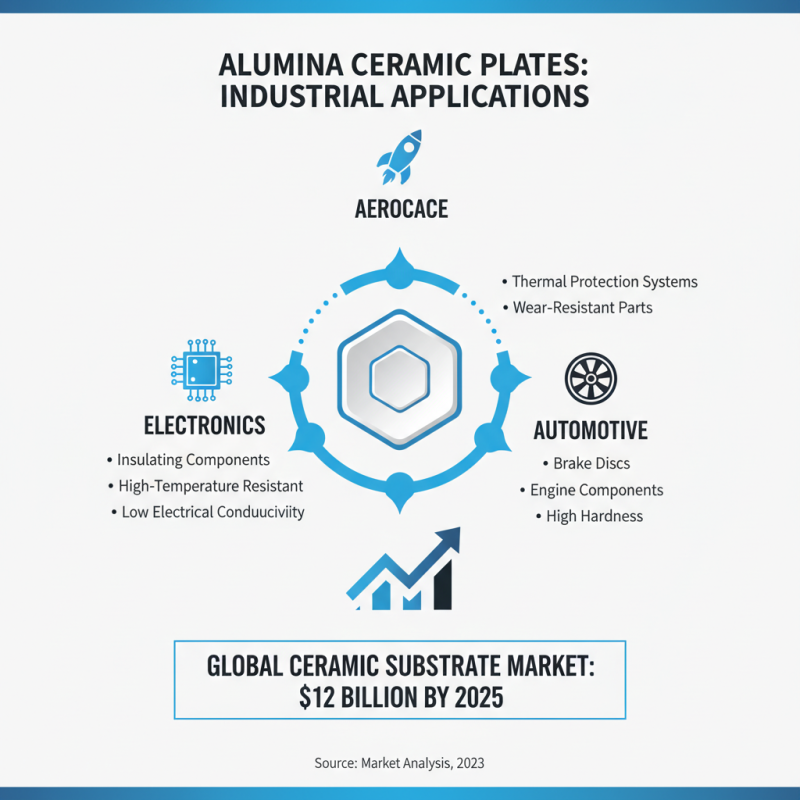
Alumina ceramic plates are widely used in industries due to their exceptional hardness and thermal stability. These plates find applications in electronics, aerospace, and automotive sectors. For instance, the electronics industry often utilizes alumina ceramics for insulating components. These plates can withstand high temperatures and have low electrical conductivity. According to a recent market analysis, the demand for ceramic substrates is projected to reach $12 billion by 2025.
In the aerospace field, alumina plates serve crucial functions, such as thermal protection and engine components. They provide weight savings while ensuring high resistance to wear and corrosion. The automotive industry also benefits from alumina ceramics in manufacturing brake pads and wear-resistant components. The properties of these plates contribute to enhanced performance and durability.
Tip: When selecting alumina ceramic plates, consider factors like thickness and finish for specific applications. The right specifications can significantly impact the performance. Keep in mind that while alumina offers many advantages, its brittleness can present challenges in some scenarios. Proper handling and application are essential to maximize their benefits.
Key Properties of Alumina Ceramics Enhancing Performance and Durability
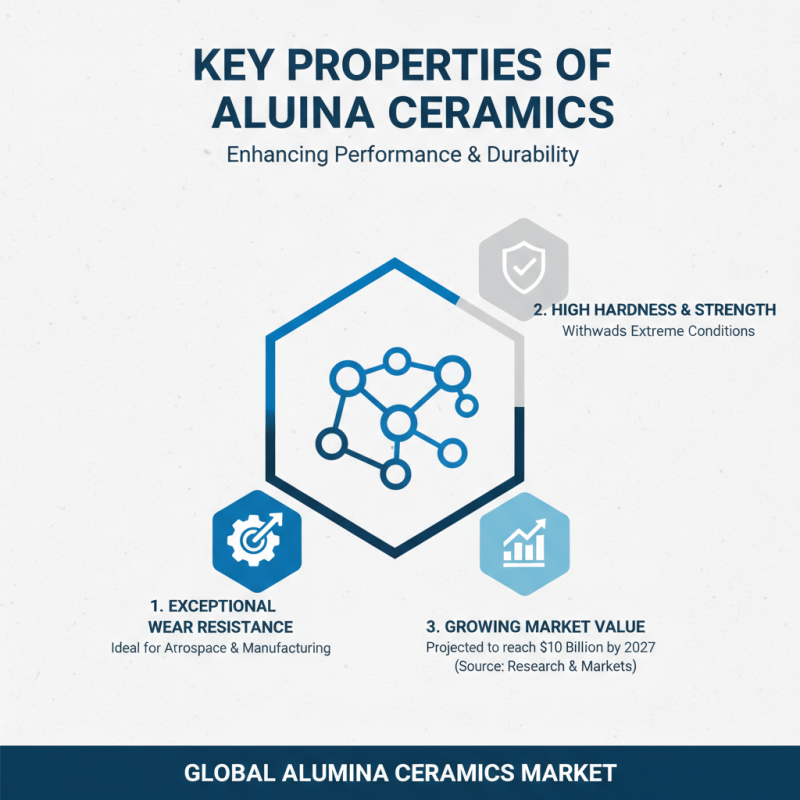
Alumina ceramics are increasingly recognized for their unique properties that enhance performance and durability across various applications. These materials demonstrate exceptional wear resistance, making them ideal for industries such as aerospace and manufacturing. According to a report by Research and Markets, the global alumina ceramics market is projected to reach $10 billion by 2027, reflecting their growing significance in technology.
The key properties of alumina ceramics include high hardness, which measures about 9 on the Mohs scale. This gives them an edge in environments subject to abrasive materials. Additionally, they have excellent thermal stability, withstanding temperatures up to 1,600°C. This ability to endure extreme conditions makes alumina ceramics suitable for components in thermal barriers and engine parts. Moreover, their low thermal conductivity allows for efficient insulation, further enhancing their utility in various applications.
Despite their advantages, the manufacturing process is not without challenges. Achieving optimal density and minimizing defects can be difficult. Variability in sintering temperatures can impact the final properties of alumina ceramics. Research indicates that improving the uniformity of particle size during production can enhance the overall quality. Addressing these production issues is key to fully harnessing the potential of alumina ceramics in advancing technology.
Market Trends: Growth of Alumina Ceramic Plate Usage in China
Alumina ceramic plates are gaining significant traction in the Chinese market. As industries seek advanced materials, the demand for these plates is increasing. They offer unique advantages, including high strength and excellent wear resistance. Many manufacturers are adopting alumina plates for various applications.
The growth trend illustrates a shift in material preferences. More companies are recognizing alumina's ability to withstand harsh conditions. This change is evident in sectors like electronics, aerospace, and healthcare. There's a noticeable increase in production capacity to meet this demand. Yet, some businesses still hesitate, questioning the long-term durability of these materials.
Despite the booming market, plenty of room for reflection exists. The cost of alumina plates can deter smaller players. Some industries may lack adequate knowledge of their benefits. Education on their applications is crucial for broader acceptance. As the market grows, overcoming these barriers will be essential to fully harness alumina's potential.
Comparative Analysis: Alumina Ceramics vs. Other Industrial Materials
Alumina ceramics shine in industrial applications due to their superior properties. They have excellent wear resistance, making them ideal for abrasive environments. In comparison, metals often succumb to corrosion, leading to frequent replacements. Alumina also withstands high temperatures without losing strength, unlike many polymers.
When contrasting alumina ceramics with other materials, distinct advantages surface. For example, while plastics are lightweight, they lack durability. Ceramics, on the other hand, offer both strength and heat resistance. However, their brittleness can be a drawback, requiring careful handling during production. Additionally, some metals may provide better ductility, but they often fall short in thermal stability.
This comparative analysis highlights significant differences. Alumina ceramics are a go-to for applications needing durability and thermal resistance. Yet, the journey of choosing the right material requires a nuanced understanding of specific needs and potential trade-offs. Exploring these various factors can lead to more effective industrial solutions.
Cost-Benefit Analysis of Alumina Ceramic Plates in Manufacturing Processes
In recent years, alumina ceramic plates have gained attention in manufacturing due to their unique properties. Industry reports indicate that these materials exhibit a hardness of around 9 on the Mohs scale. This makes them an ideal choice for wear-resistant applications. For example, the mining and aerospace sectors benefit greatly from using alumina ceramics.
A cost-benefit analysis shows that while the initial investment in alumina ceramics can be higher than alternative materials, the long-term savings are significant. According to a study by the American Ceramic Society, the lifespan of alumina plates is typically two to three times longer than that of steel counterparts. This durability translates to lower replacement costs and reduced downtime in production processes.
Moreover, alumina ceramics contribute to energy efficiency. Their high thermal stability allows for better insulation during manufacturing. This property can lead to savings on energy bills. Yet, it's important to consider potential challenges, such as the brittleness of ceramics, which can lead to breakage during handling. Achieving the right balance between durability and usability remains an ongoing discussion in the industry.
Applications and Benefits of Alumina Ceramic Plates