Inquiry
Form loading...
Choosing the right Alumina Ceramic Nozzles in 2026 requires more than comparing prices and purity percentages. Global buyers need reliable evidence, practical testing, and clear application data. A nozzle used for abrasive blasting faces different demands from one used in thermal spraying, powder delivery, or precision dispensing. The material grade, bore diameter, wall thickness, and mounting design can affect service life. Small differences matter.
In field evaluations, operators often inspect the inner bore after several production shifts. Uneven wear may appear near the outlet, even when the outer surface still looks clean. High-purity alumina, commonly above 95%, can offer strong hardness and electrical insulation. However, purity alone does not guarantee performance. Sintering quality, dimensional tolerance, surface finish, and thermal-shock resistance also require verification. Buyers should request inspection reports, sample measurements, and application references before placing large orders.
This guide examines the 2026 market from a practical purchasing perspective. It considers supplier experience, manufacturing consistency, quality-control methods, packaging, and after-sales support. It also explains how to compare technical claims with actual operating conditions, including pressure, temperature, abrasive type, and replacement frequency. No single nozzle fits every process. That is the difficult part. Some published specifications may look impressive but lack independent validation. Our recommendations therefore remain evidence-based, while acknowledging that laboratory results cannot fully reproduce every factory environment. Careful trials, transparent communication, and documented quality checks provide the most dependable path for global buyers.
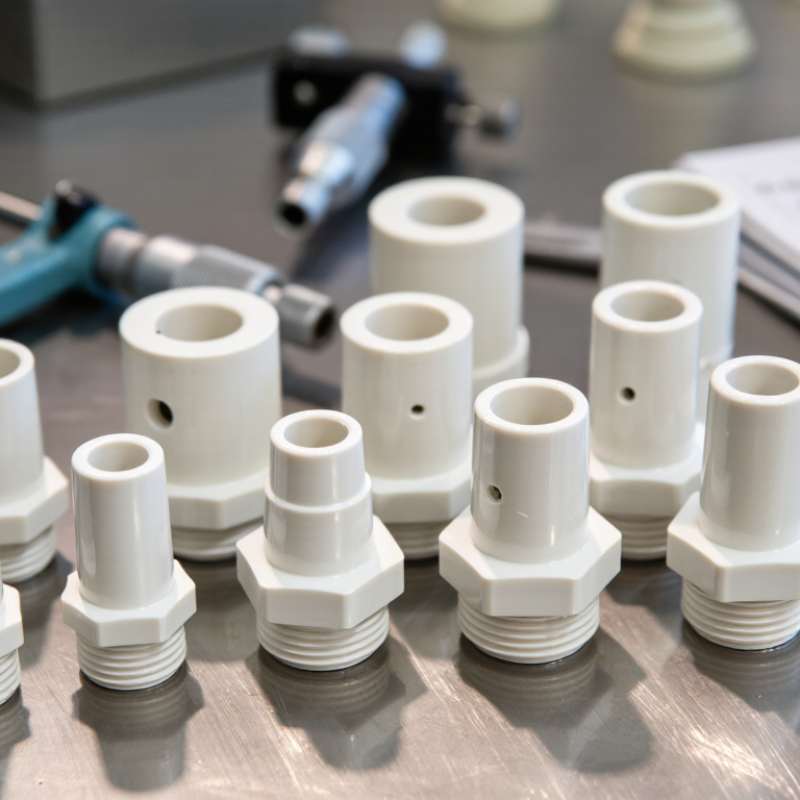
For global buyers in 2026, alumina ceramic nozzle selection should begin with purity, not appearance. Grades around 90–95% alumina offer practical toughness, lower cost, and better resistance to sudden temperature changes. They suit abrasive powder delivery, general thermal spraying, furnace fixtures, and some molten-metal handling systems. Their surface may show tiny machining marks. That is not automatically a defect. Flow stability still depends on bore geometry, concentricity, and gas pressure. A cheaper nozzle can become expensive when its bore enlarges prematurely.
At 96–99% purity, alumina provides stronger wear resistance, electrical insulation, and chemical stability. These grades fit plasma spraying, high-voltage equipment, analytical instruments, and corrosive process lines. For repeated thermal cycling, engineers should review wall thickness and thermal expansion, not purity alone. A 99.5% grade often balances cleanliness and durability in demanding industrial nozzles. It can perform well, but only with controlled installation and clean feedstock. Small contamination matters.
Ultra-high-purity 99.9% alumina is chosen where contamination control and high-temperature stability dominate operating costs. Typical uses include semiconductor processing, vacuum equipment, precision laboratory systems, and specialized sintering hardware. However, higher purity does not guarantee longer service life. Impact, clamping stress, blocked passages, and uneven heating can still cause cracking. Experienced buyers request density, open porosity, hardness, dimensional tolerance, and thermal-shock data. They should compare test methods across suppliers because certificates are not always directly comparable. I would leave room for review after field trials; laboratory results can miss real dust, vibration, and operator handling.
| Alumina Grade | Alumina Purity | Typical Main Phase | Typical Density | Thermal Conductivity at Room Temperature | Indicative Continuous Service Temperature | Recommended Nozzle Applications | Key Selection Characteristics |
|---|---|---|---|---|---|---|---|
| 90% Alumina | Approximately 90% | Alumina with glassy and silicate phases | 3.40–3.60 g/cm³ | Approximately 18 W/m·K | Up to approximately 1,400°C | General-purpose abrasive blasting nozzles, low-to-moderate temperature burner components, ceramic spray equipment, and wear-resistant guides | Cost-effective; good wear resistance and electrical insulation; suitable where extreme purity and temperature resistance are not required |
| 92% Alumina | Approximately 92% | Alumina with a limited glassy phase | 3.50–3.60 g/cm³ | Approximately 20 W/m·K | Up to approximately 1,450°C | Blasting nozzles, powder-processing equipment, material-transfer chutes, and moderate-temperature fluid or gas nozzles | Balanced mechanical strength, wear resistance, price, and thermal performance |
| 95% Alumina | Approximately 95% | Predominantly alpha-alumina | 3.65–3.75 g/cm³ | Approximately 24 W/m·K | Up to approximately 1,500°C | Industrial spray nozzles, ceramic processing fixtures, pneumatic conveying components, and wear liners | Improved hardness, dimensional stability, and chemical resistance compared with lower-purity grades |
| 96% Alumina | Approximately 96% | High alpha-alumina content | 3.70–3.75 g/cm³ | Approximately 25 W/m·K | Up to approximately 1,550°C | Precision spray nozzles, furnace fixtures, thermal-processing parts, and chemically exposed conveying systems | Good combination of strength, thermal shock resistance, dielectric performance, and corrosion resistance |
| 99% Alumina | Approximately 99% | High-purity alpha-alumina | 3.75–3.85 g/cm³ | Approximately 28 W/m·K | Up to approximately 1,650°C | High-temperature gas nozzles, molten-metal handling components, semiconductor-processing fixtures, and vacuum-system insulators | High hardness, low contamination, strong electrical insulation, and excellent resistance to many chemicals |
| 99.5% Alumina | Approximately 99.5% | Very high-purity alpha-alumina | 3.85–3.90 g/cm³ | Approximately 30 W/m·K | Up to approximately 1,700°C | High-purity spray and dispensing nozzles, analytical and laboratory equipment, semiconductor components, and high-temperature furnace hardware | Very low impurity levels, excellent wear resistance, high dielectric strength, and strong resistance to thermal and chemical attack |
| 99.8% Alumina | Approximately 99.8% | Ultra-high-purity alpha-alumina | 3.88–3.93 g/cm³ | Approximately 31 W/m·K | Up to approximately 1,750°C | Semiconductor and electronic-material processing, high-vacuum nozzles, corrosive-gas delivery, and precision laboratory equipment | Very low alkali and metallic contamination; selected for purity, dimensional stability, and demanding electrical environments |
| 99.9% Alumina | Approximately 99.9% | Ultra-high-purity alpha-alumina | 3.90–3.95 g/cm³ | Approximately 32 W/m·K | Up to approximately 1,800°C | Ultra-clean semiconductor processes, high-temperature research equipment, specialty vacuum systems, and highly corrosive or contamination-sensitive applications | Maximum purity and contamination control; typically chosen when process cleanliness is more important than material cost |
Note: Values are typical engineering ranges for dense alumina ceramics. Actual performance depends on formulation, sintering method, porosity, nozzle geometry, wall thickness, thermal cycling, atmosphere, and operating conditions. The applicable service temperature should be confirmed for the specific nozzle design.