What Are High Temperature Ceramic Bushings?
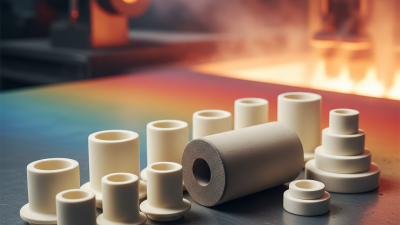
High Temperature Ceramic Bushings are engineered components that support rotating or sliding shafts in severe thermal environments. Unlike common metal bushings, they can maintain insulation and dimensional stability when heat, corrosion, or electrical voltage becomes a concern. Typical materials include alumina, zirconia, and silicon nitride. Each material behaves differently under pressure, vibration, and rapid temperature changes.
In practical equipment, these bushings may operate inside furnaces, kilns, vacuum systems, or high-temperature electrical assemblies. A properly selected bushing can reduce metal contamination and limit unwanted current transfer. The details matter. Shaft clearance, surface finish, mounting pressure, and thermal expansion must match the application. A small mismatch may create cracking, seizure, or premature wear. Engineers should review supplier test data, material certificates, and temperature ratings before installation.
However, ceramic is not automatically superior. Its hardness offers excellent wear resistance, but its brittleness demands careful handling. Thermal shock remains a common concern. Even a high-grade part can fail when a cold shaft enters a hot chamber too quickly. This article examines how High Temperature Ceramic Bushings are designed, selected, and tested for dependable service. It also considers limitations that product descriptions often overlook. Real performance depends on load, atmosphere, lubrication, and installation quality. Laboratory results help, but field conditions can be less predictable. That uncertainty deserves attention.
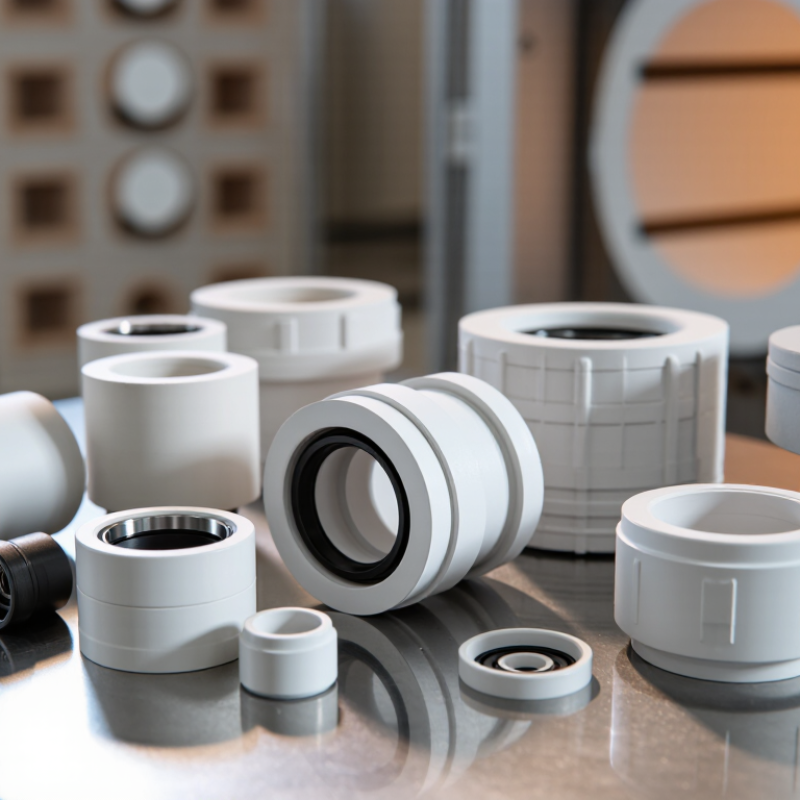
Definition and Core Structure of High Temperature Ceramic Bushings
What Are High Temperature Ceramic Bushings?
Definition and Core Structure of High Temperature Ceramic Bushings
High temperature ceramic bushings are insulating sleeves designed to support moving or fixed components in severe heat. They reduce friction, electrical leakage, and direct contact between parts. Unlike polymer bushings, they do not soften quickly near heat sources. However, temperature resistance depends on ceramic grade, load, atmosphere, and heating speed.
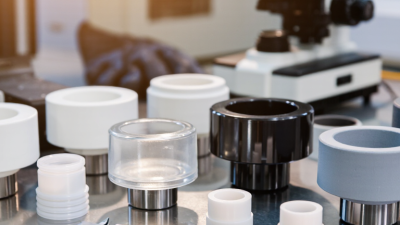
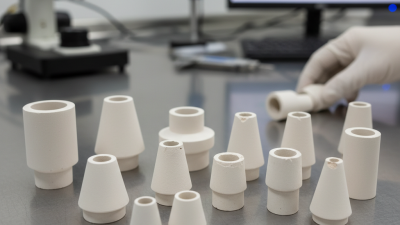
The core structure is usually a dense ceramic sleeve with a central bore. The bore guides a shaft, pin, thermocouple, or cable assembly. Some designs include a flange, shoulder, or recessed end. These features control axial movement and improve installation accuracy. Alumina is common because it offers strong electrical insulation, hardness, and chemical stability. Zirconia can provide better toughness in selected applications.
Small details matter. A smooth bore limits wear on the mating shaft. A carefully sized clearance allows thermal expansion without binding. Metal collars or retaining rings may support the bushing, but they must not create damaging point pressure. Ceramic does not yield like metal. It can chip from a sharp edge or crack after sudden cooling. That assumption is incomplete.
In practical inspection, technicians should check bore roundness, edge damage, surface contamination, and mounting stress. A bushing that looks perfect may still fail after repeated thermal cycling. Design calculations help, but real operating conditions deserve testing. Humidity, vibration, and uneven heating can change performance. No single ceramic grade fits every high-temperature assembly.
Key Materials Used in Heat-Resistant Ceramic Bushings
What Are High Temperature Ceramic Bushings?
High-temperature ceramic bushings insulate shafts, pins, and electrical parts near furnaces or engines. Their performance depends heavily on material selection. Alumina remains a common choice because it offers strong electrical insulation, hardness, and useful thermal stability. The U.S. Geological Survey’s Mineral Commodity Summaries 2024 reported approximately 400 million metric tons of global bauxite production in 2023, supporting a broad alumina supply chain. However, raw-material availability does not guarantee consistent bushing quality.
Alumina bushings often operate near 1,500°C, depending on purity, loading, and design. Zirconia provides lower thermal conductivity, commonly around 2–3 W/m·K at room temperature, according to technical property data compiled in the ASM Handbook. That characteristic can reduce heat transfer through a bushing. Silicon nitride offers better thermal-shock resistance and thermal conductivity, typically around 20–30 W/m·K. It suits rotating or rapidly heated assemblies, where sudden temperature changes create dangerous stress.
Small details matter.
Porosity, surface finish, and clearance can change service life. A dense ceramic may still crack if the metal shaft expands faster than the bushing. The International Organization for Standardization’s ISO 6474-1 framework for advanced technical ceramics highlights controlled mechanical and physical properties, but real assemblies remain more complicated. Material tables are useful, not perfect. In practical testing, humidity, vibration, contamination, and uneven heating often expose weaknesses that laboratory data misses.
How High Temperature Ceramic Bushings Operate
High temperature ceramic bushings support rotating or sliding shafts where metal sleeves may soften, oxidize, or seize. They commonly use alumina, zirconia, or silicon nitride. These ceramics retain hardness at elevated temperatures and resist many corrosive environments.
The bushing creates a stable contact surface around the moving shaft. During operation, its smooth bore limits direct metal-to-metal contact. Some designs run dry, while others use compatible high-temperature lubricants. The correct choice depends on load, speed, atmosphere, and temperature cycles. Ceramic expands less than many metals, but it still needs calculated clearance. A tight fit can cause binding when the shaft and housing heat unevenly.
Installation matters greatly. Clean particles from the bore and inspect the shaft for scoring before assembly. Press the bushing evenly, never by striking its brittle edge. In service, listen for squealing, monitor vibration, and check for unusual heat near the housing. A practical mistake is assuming ceramic components cannot fail. They can crack from impact, misalignment, or sudden thermal shock. I have found that gradual heating and accurate alignment often protect them better than excessive lubrication. Small design errors remain visible under severe heat.
Performance Benefits and Technical Limitations
What Are High Temperature Ceramic Bushings?
High temperature ceramic bushings guide shafts where conventional polymers soften or degrade. Alumina grades typically withstand continuous service near 1,000–1,500°C, depending on purity, load, and atmosphere. ASM Handbook, Volume 4C, reports alumina thermal expansion near 8 × 10⁻⁶/K. This low expansion supports dimensional stability around furnaces, kilns, and thermal-processing equipment. In practice, the bushing can remain clean and electrically insulating. That matters near sensors and heating elements.
Performance benefits come with technical limitations. Ceramic surfaces resist oxidation, wear, and many corrosive chemicals. Their hardness also reduces scoring from dust particles. However, ceramics are brittle. A small installation impact can create a crack that grows during heating. Thermal shock remains a serious concern. Fast temperature changes can exceed the material’s fracture resistance. Zirconia offers higher toughness than alumina, but its expansion is typically around 10–11 × 10⁻⁶/K, according to ASM Handbook data. Shaft alignment must match this behavior. My practical concern is often overlooked: a “high-temperature” rating says little about vibration, side loading, or poor lubrication.
Tips: Measure the shaft and housing at operating temperature. Use generous edge radii. Avoid press-fitting cold parts without thermal calculations. Check ASTM C1161 flexural-strength data for the selected ceramic grade. Test thermal cycling before full production. A single laboratory run is not enough. Temperature records should include ramp rate, not only peak temperature.
Industrial Applications and Selection Considerations
High-temperature ceramic bushings support rotating shafts, electrical conductors, and moving parts where polymers or metals may soften, oxidize, or seize. Common materials include alumina, silicon nitride, and zirconia. Alumina often serves continuous-duty applications near 1,000–1,500°C, depending on purity, load, and atmosphere. Actual performance varies. It should never be selected from temperature alone.
Industrial demand is closely linked to energy-intensive processing. The International Energy Agency’s Energy Efficiency 2023 report identifies industry as responsible for about 37% of global final energy consumption. Ceramic bushings therefore appear in furnace conveyors, kiln systems, glass-processing lines, semiconductor equipment, and high-temperature electrical assemblies. The U.S. Department of Energy’s Industrial Decarbonization Roadmap also highlights thermal processing as a major industrial energy challenge. Component reliability matters.
Selection should begin with the operating profile: temperature cycles, shaft speed, radial load, vibration, and surrounding chemicals. Thermal shock is often overlooked. A bushing that survives steady heat may crack during rapid cooling. Surface finish and shaft hardness also affect wear. Do not ignore clearance; ceramics expand differently from steel. In dusty service, a tighter fit can become a failure point. In my experience, drawings often show peak temperature but omit heating rate and contamination. That assumption is risky. Ask for measured duty-cycle data, not just catalogue ratings. Validate the final design through load, friction, and thermal-cycle testing under realistic conditions. Compatibility testing remains essential.
What Are High Temperature Ceramic Bushings?
High temperature ceramic bushings provide electrical insulation and mechanical support in environments where conventional polymers or metals may lose performance. Material selection depends on continuous operating temperature, thermal shock, dielectric requirements, mechanical loading, and the surrounding atmosphere.
The chart shows representative upper continuous-use temperatures for common ceramic material families. Actual limits vary with purity, geometry, atmosphere, thermal cycling, mechanical stress, and manufacturer design data; engineering validation is required before final selection.