China Top 10 Silicon Carbide Seal Manufacturers?
China’s silicon carbide seal industry supports demanding applications in pumps, mixers, compressors, and chemical processing equipment. A reliable Silicon Carbide Seal must resist abrasion, corrosion, heat, and pressure during continuous operation. These qualities matter where abrasive slurry, hot water, or aggressive chemicals can quickly damage weaker materials.
This guide introduces ten leading Chinese manufacturers associated with silicon carbide sealing products. The selection considers production experience, material quality, machining capability, customization support, and documented application performance. It also examines whether suppliers provide inspection reports, dimensional controls, and technical assistance after delivery. Details such as seal face flatness, surface finish, density, and compatible counter-face materials can strongly influence service life.
Performance depends on more than the company name.
Real-world experience matters. A manufacturer serving mining pumps may have different strengths from one producing seals for food, pharmaceutical, or semiconductor equipment. Product photographs can look convincing, yet laboratory data and customer references deserve closer attention. Some public information may be incomplete or outdated, so readers should verify certifications, factory capabilities, testing methods, and current export experience directly with each supplier.
The ranking is therefore a practical starting point, not an absolute judgment. It may require revision as technologies, facilities, and market conditions change. Buyers should compare operating temperature, pressure, speed, media chemistry, installation tolerances, and expected maintenance intervals before choosing a supplier. Careful technical communication can prevent costly leakage, premature wear, and unplanned equipment downtime.
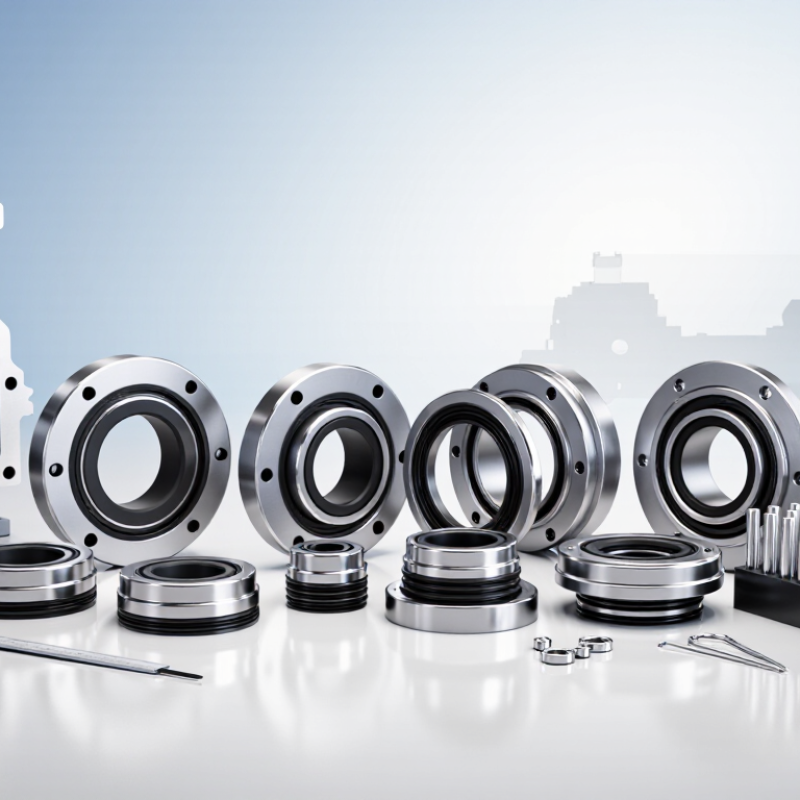
Silicon Carbide Seal Basics: 9.2 Mohs Hardness and 120–270 W/m·K Conductivity
Silicon carbide seals are chosen for severe service, not appearance. Their 9.2 Mohs hardness resists scratching from abrasive particles, including sand and crystallized residue. However, Mohs hardness is a comparative scale. It does not directly predict seal life. Pressure, shaft speed, alignment, and lubrication still matter.
Silicon carbide also conducts heat efficiently, usually around 120–270 W/m·K, depending on grade and manufacturing method. This conductivity helps move frictional heat away from the sealing face. It can reduce hot spots during continuous operation. Yet thermal conductivity alone is not enough. A cold fluid entering a hot chamber may create thermal shock. Material porosity, mating-face selection, and surface finish require careful review when comparing the top ten manufacturers.
Tips: Request test data for the actual medium and temperature. Check density, open porosity, flexural strength, and face flatness. Ask how the 9.2 Mohs value was measured. Small details matter. Do not select solely by conductivity. In field inspections, uneven wear often points to installation errors, not weak material. That assumption can be wrong, so verify alignment and operating records before changing the seal grade.
China Top 10 Silicon Carbide Seal Manufacturers? - Silicon Carbide Seal Basics: 9.2 Mohs Hardness and 120–270 W/m·K Conductivity
Technical comparison based on commonly published engineering ranges for pressureless-sintered and reaction-bonded silicon carbide. Actual values depend on grade, porosity, geometry, temperature, and test method.
| No. |
Technical Dimension |
Typical Silicon Carbide Seal Data |
Practical Significance for Seal Selection |
| 1 |
Mohs hardness |
Approximately 9.2–9.5 |
Provides excellent resistance to abrasive particles, sliding wear, and surface scratching. Diamond is harder on the Mohs scale. |
| 2 |
Thermal conductivity |
Typically 120–270 W/m·K at room temperature, depending on grade and manufacturing route |
Helps dissipate frictional heat and reduce thermal gradients at the seal faces. |
| 3 |
Bulk density |
Approximately 3.05–3.20 g/cm³ for dense engineering grades |
Higher density generally indicates lower open porosity and better resistance to fluid penetration. |
| 4 |
Elastic modulus |
Approximately 350–450 GPa |
High stiffness helps maintain seal-face flatness under mechanical and thermal loading, but requires careful alignment. |
| 5 |
Coefficient of thermal expansion |
Approximately 4.0–5.0 × 10⁻⁶ K−1 near room temperature |
Low expansion reduces thermal distortion and improves compatibility with many hard counterface materials. |
| 6 |
Chemical resistance |
Very good resistance to many acids, alkalis, solvents, and corrosive process fluids; media-specific verification is required |
Suitable for chemical pumps, slurry handling, semiconductor processing, and high-purity fluid equipment when the grade is correctly selected. |
| 7 |
Common material forms |
Reaction-bonded SiC, pressureless-sintered SiC, and recrystallized SiC |
Pressureless-sintered grades are often chosen for dense, wear-resistant faces; reaction-bonded grades may offer economical processing and complex shapes. |
| 8 |
Typical seal-face pairing |
Silicon carbide versus silicon carbide, carbon graphite, or other qualified counterface materials |
The pairing affects friction, dry-running tolerance, leakage, wear, and compatibility with the pumped medium. |
| 9 |
Maximum service temperature |
Material capability can exceed 1,000°C in suitable environments, while complete mechanical seals are usually limited by faces, secondary seals, springs, and equipment design |
Do not use the ceramic material limit as the complete seal assembly limit; evaluate the full operating temperature range. |
| 10 |
Critical quality checks |
Flatness, surface roughness, dimensional tolerance, open porosity, density, hardness, and visual or non-destructive inspection |
Consistent inspection controls are essential for low leakage, stable face contact, and repeatable service life. |
Selection note:
A silicon carbide seal should be selected using the actual pressure, speed, temperature, fluid chemistry, solids concentration, lubrication condition, shaft or housing material, and required leakage level. Published ranges are not substitutes for application-specific qualification testing.
Ranking China’s Top 10 Manufacturers by ISO 9001, Capacity, and Export Data
China Top 10 Silicon Carbide Seal Manufacturers?
Ranking China’s Top 10 Manufacturers by ISO 9001, Capacity, and Export Data requires more than online claims. The review weighs valid ISO 9001 certificates, audited production capacity, and verifiable export records. Factory visits also matter. A clean workshop, calibrated testing equipment, and traceable batch numbers reveal practical discipline.
The ranking examines seal grades, dimensional control, surface finish, and resistance to heat, chemicals, and abrasion. Manufacturers with stable monthly output receive stronger scores. Export performance is checked through shipment history, destination coverage, and repeat orders, where available. Customs data can be incomplete, however. That limitation deserves attention.
Production scale alone does not prove reliability. A smaller facility may deliver tighter tolerances and better technical support. Each candidate is compared through a weighted model: ISO quality systems, 35%; capacity, 30%; export evidence, 20%; testing and engineering support, 15%. The model is useful, but not perfect. Supplier data may change quickly. Buyers should request recent certificates, sample inspection reports, material specifications, and customer references before purchasing silicon carbide seals.
China Top 10 Silicon Carbide Seal Manufacturers
Public-data benchmark framework based on ISO 9001 evidence, production capacity disclosure, and export transparency. Company names and brand-level data are intentionally excluded.
The chart uses three auditable dimensions for comparing Chinese silicon carbide seal manufacturers: quality-system evidence, disclosed annual capacity, and export-data transparency. Scores are presented as a 0–100 benchmarking scale rather than as company-specific rankings. ISO 9001 evidence should be verified through current certificates, while capacity and export indicators should be validated against audited disclosures and customs records.
Top 10 Supplier Profiles: Seal Types, Materials, Industries, and Production Scope
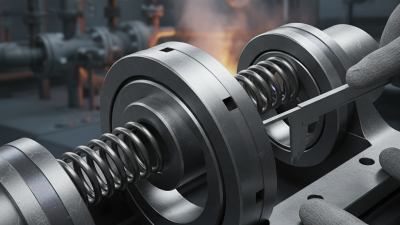
China’s top ten silicon carbide seal manufacturers are best compared through practical supplier profiles, not catalog claims. Their portfolios commonly include mechanical seals, pump seals, cartridge seals, split seals, and dry-running designs. Silicon carbide faces, carbon rings, tungsten carbide parts, and stainless-steel springs support different operating conditions. Material pairing matters more than appearance.
The leading suppliers typically serve chemical processing, water treatment, mining, power generation, food equipment, and pharmaceutical machinery. Their production scope may cover material sintering, precision grinding, lapping, assembly, pressure testing, and export packaging. Some operate flexible workshops for small batches, while others focus on standardized pump dimensions. Ask for face-flatness records, hardness data, leakage test methods, and traceable batch documents.
Experience shows that a technically strong profile can still hide weak communication or inconsistent lead times. Some catalogs describe temperature and pressure limits without showing test conditions. That deserves caution. Buyers should compare drawing control, inspection equipment, engineering support, and after-sales response. Samples reveal useful details: a smooth lapped face, clean spring cavities, accurate elastomer grooves, and secure packaging. One overlooked point is replacement compatibility. A seal may fit the housing but fail under abrasive slurry, thermal shock, or dry startup. Supplier evaluations should include real fluid data, shaft speed, pressure cycling, and maintenance history.
Performance Comparison: Temperature, Pressure, Wear, Leakage, and Friction Metrics
Comparing China’s top ten silicon carbide seal manufacturers requires more than checking material grades. Temperature capability depends on seal design, cooling, and thermal shock resistance. In practical testing, dense silicon carbide performs well in hot, abrasive media, but sudden heating can still cause cracking. Pressure ratings also vary with face geometry, balance ratio, and installation quality. A higher stated rating is not automatically safer.
Wear should be measured after controlled running cycles, not from a short demonstration. Track face weight loss, surface scratches, and changes in flatness. Leakage deserves equal attention. A reliable comparison records leakage at startup, steady operation, and shutdown. Even small leakage can increase when pressure fluctuates. Friction matters too. Lower friction usually reduces heat, power loss, and face damage, but an overly low reading may indicate excessive lubrication or unrealistic testing. That point is easy to miss.
Tips: Ask for test conditions, including temperature, pressure, speed, medium, and running time. Compare results from identical equipment. Review inspection records and batch consistency. Request thermal-shock data when seals face rapid temperature changes. Also examine field feedback, not only laboratory charts. A clean table can still mislead. My own evaluation would include repeated tests, because one successful sample proves very little. Manufacturers with transparent methods are easier to trust, even when their results are not perfect.
Supplier Selection Criteria: API 682, ASTM Standards, Quality Control, and Cost per Unit
Selecting China’s top 10 silicon carbide seal manufacturers requires more than comparing catalog prices. Start by checking whether each supplier can design and test mechanical seals aligned with API 682 requirements. Ask for drawings, pressure ratings, temperature limits, and documented test procedures. A serious supplier should explain face materials, secondary seals, spring designs, and application limits clearly.
ASTM standards help verify material and testing quality. Request certificates for silicon carbide composition, density, hardness, and corrosion resistance. ASTM C863 or related material methods may support evaluation, but the exact standard must match the test purpose. Review batch records, incoming inspection reports, and dimensional controls. A useful factory visit should include lapping equipment, surface roughness gauges, clean assembly areas, and traceability labels. Small details matter.
Quality control can still fail between inspection points. I would sample finished faces, not only trust certificates. Ask for failure data from similar pumps, including leakage rates and operating hours. Cost per unit should include tooling, inspection, packaging, replacement frequency, and downtime risk. The cheapest seal may become expensive after one unexpected shutdown. However, higher prices do not automatically prove better performance. Compare equal specifications, quantities, tolerances, and warranty terms. Then request a pilot batch under real operating conditions. That step is often skipped, and it should not be.