Inquiry
Form loading...

How to Choose Ceramic Sleeves for Global Sourcing?

Choosing Ceramic Sleeves for global sourcing is not simply a price comparison. It is a technical decision involving material behavior, production consistency, logistics, and supplier reliability. A sleeve that looks flawless under warehouse lighting may crack during thermal cycling, wear quickly, or fail to protect a moving shaft.

The late ceramic-science authority W. David Kingery stated, “The properties of ceramics are determined by their processing history.” That principle remains practical today. Buyers should examine alumina or zirconia grades, dimensional tolerances, surface finish, hardness, dielectric strength, and resistance to heat, chemicals, and abrasion. Small details matter. A 0.05-millimeter variation can affect assembly performance. A rough inner surface can damage a coated shaft.

Global sourcing adds another layer of risk. Request production samples, inspection reports, material certificates, and clear drawings before approving a supplier. Ask how the factory controls shrinkage, grinding, cleaning, and final inspection. Confirm packaging methods, especially for thin-wall sleeves traveling long distances. Cracked edges often reveal weak packing, not weak ceramics.

Do not choose the lowest quotation too quickly. Total cost includes rejected parts, delayed production, customs handling, and emergency replacements. An experienced supplier should explain limitations honestly, rather than promise perfect results. No checklist is perfect. I have seen technically strong specifications fail because the operating temperature was underestimated. A careful sourcing process compares laboratory data with real service conditions. It also leaves room for testing, revision, and a little uncomfortable questioning before the purchase order is released.

How to Choose Ceramic Sleeves for Global Sourcing?

What Are Ceramic Sleeves and Where Are They Used?

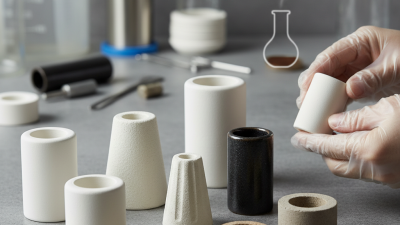
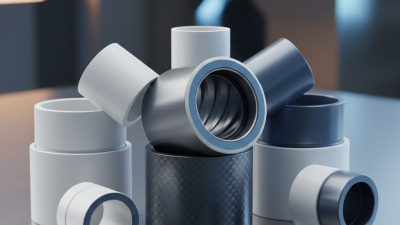
Ceramic sleeves are precision tubes that align, protect, or electrically isolate components. They are commonly made from alumina, zirconia, or steatite. Their value comes from hardness, dimensional stability, corrosion resistance, and low electrical conductivity. A ceramic sleeve is not the same as a ferrule. The sleeve usually supports alignment or insulation, while the ferrule holds a fiber or pin.

In fiber-optic adapters, zirconia sleeves maintain tight alignment between two polished connectors. Small dimensional errors can increase insertion loss. MarketsandMarkets reported that the global fiber-optic connector market was valued at about USD 6.8 billion in 2023, with continued growth expected through 2028. Ceramic sleeves also appear in thermocouples, heating assemblies, vacuum equipment, medical instruments, and high-temperature electrical systems. Grand View Research estimated the advanced ceramics market at approximately USD 89.8 billion in 2023, reflecting broad industrial demand.

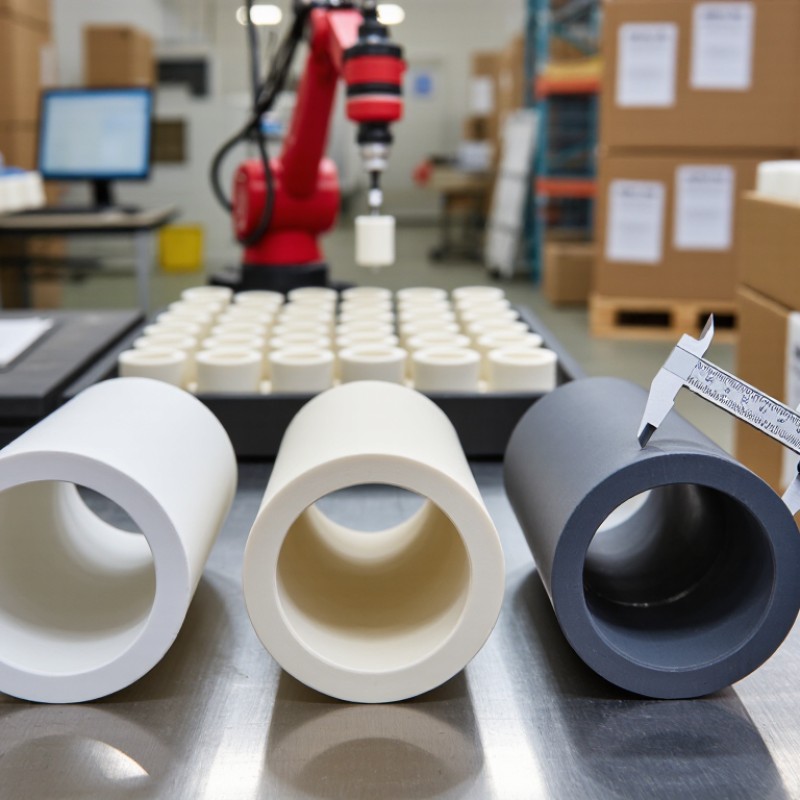
For global sourcing, confirm inner diameter, outer diameter, length, roundness, surface finish, and temperature range. Ask for material certificates and inspection records. Density and porosity matter, especially in vacuum or corrosive environments. A recurring sourcing mistake is choosing by material name alone. Two alumina parts can perform differently because their purity and sintering processes differ. Tolerance claims also need measurement methods. This detail is often missing. Small cracks may appear only after thermal cycling, so sample testing should include heat exposure, fit checks, and visual inspection under magnification.

How to Define Technical Requirements for Ceramic Sleeves

Defining ceramic sleeve requirements starts with the operating environment, not a catalog photo. Record the inner diameter, outer diameter, length, wall thickness, and allowable tolerance. A 0.05 mm error can create assembly stress or unwanted movement. State whether the sleeve guides, insulates, protects, or supports a component. That function determines the design priorities. Do not rely on nominal dimensions alone.

Specify the ceramic composition, dielectric strength, temperature range, hardness, and chemical exposure. Alumina may suit high insulation needs, while other ceramics may offer different toughness or thermal behavior. Ask for measured data, not only typical values. Surface finish matters where wires, shafts, or seals contact the sleeve. Define the test method, sample size, and acceptance limits before requesting quotations. Otherwise, two suppliers may pass different tests. That gap is easy to miss.

During global sourcing, convert the requirements into a controlled drawing and inspection checklist. Include checks for cracks, chips, concentricity, roundness, and contamination. I have seen attractive samples fail because packaging allowed edge damage during transit. Request samples from the intended production process. Check fit at room temperature and, when relevant, after thermal cycling. Require batch traceability and agreed inspection records. Keep revision numbers on every drawing and report. One uncomfortable question remains: is every tolerance truly necessary? Over-specification raises cost and can reduce supplier flexibility. Under-specification creates disputes.

How to Choose Ceramic Sleeves for Global Sourcing? - How to Define Technical Requirements for Ceramic Sleeves
Technical Dimension Requirement to Define Typical Ceramic Sleeve Data Recommended Verification or Acceptance Criteria Global Sourcing Notes
Application Operating function and environment Electrical insulation, high-temperature protection, wear guidance, optical-fiber alignment, or chemical isolation. Define exposure to moisture, dust, vibration, chemicals, vacuum, and thermal cycling. Supplier should provide a material and application compatibility statement based on the completed operating-condition form. Do not source by the term “ceramic sleeve” alone; the same term may describe different materials and manufacturing processes.
Material Ceramic composition and grade High-purity alumina commonly contains 95% to 99.8% Al2O3. Zirconia is commonly selected when higher fracture toughness or wear resistance is required. Require a material certificate stating composition, density, sintering condition, and applicable test method. Specify the ceramic grade rather than accepting an unspecified “industrial ceramic” designation.
Dimensions Outside diameter, inside diameter, wall thickness, and length Example drawing callout: outside diameter 6.00 mm, inside diameter 4.00 mm, length 25.00 mm, nominal wall thickness 1.00 mm. All dimensions should be referenced to a controlled drawing. Critical internal diameters should be inspected with calibrated plug gauges, air gauges, or coordinate measurement equipment. State whether dimensions are measured before or after any coating, metallization, or assembly operation.
Dimensional Tolerance Tolerance for each critical feature For precision small ceramic parts, a drawing may require ±0.02 mm to ±0.10 mm depending on size, geometry, process, and inspection capability. Use individual tolerances for functional features instead of relying only on a general tolerance block. Confirm that the proposed manufacturing process can achieve the tolerance after firing shrinkage.
Concentricity Alignment between the inner and outer diameters Typical precision requirements may range from 0.03 mm to 0.10 mm total indicator reading, depending on sleeve size and application. Define the datum, measurement method, and maximum total runout or concentricity value on the drawing. Concentricity is especially important for optical alignment, rotating assemblies, and thin-wall sleeves.
Surface Finish Surface roughness of bore and outside diameter Ground ceramic surfaces may commonly be specified around Ra 0.4 to 1.6 µm. Polished surfaces can require lower roughness where sliding, sealing, or optical alignment is involved. Specify Ra or another agreed roughness parameter, sampling location, and measurement direction. Do not use “smooth surface” as the only requirement because it is not objectively measurable.
Edge Condition Chamfer, radius, and edge-chipping limits Typical drawing callouts include a 0.2 mm to 0.5 mm chamfer or radius. Edge chips should be limited by maximum length, width, and depth. Define allowable chips separately from cracks. Any crack extending into the functional wall should normally be rejected. Edges are vulnerable during sintering, grinding, cleaning, packing, and international transport.
Density Sintered bulk density Dense alumina is commonly above 3.60 g/cm³, while theoretical density is approximately 3.98 g/cm³. Zirconia density depends strongly on composition and stabilizer content. Require a lot-based density test or material certificate using an agreed method, such as Archimedes density measurement. Density variation can indicate porosity, incomplete sintering, or composition differences.
Porosity Open porosity and absorption For electrical, vacuum, and fluid-barrier applications, near-zero open porosity is generally preferred. Requirements should be stated as a maximum value or as a documented test result. Use visual inspection together with an agreed water-absorption, helium-leak, or other application-specific test where necessary. Low open porosity improves resistance to moisture penetration and contamination retention.
Mechanical Strength Flexural strength and fracture resistance High-purity alumina often provides flexural strength in the approximate range of 250 to 400 MPa, depending on grade, geometry, and test method. Specify the strength test method, specimen geometry, surface condition, and minimum lot value. Ceramic strength is statistically variable and flaw-sensitive. Use a safety factor and avoid applying tensile or impact loads that are not represented by the test specification.
Hardness and Wear Resistance to abrasion, scratching, and sliding wear Alumina is very hard and is commonly selected for abrasive environments. Zirconia may offer better toughness in some contact and wear applications. Define the counter-material, load, speed, temperature, lubricant condition, test duration, and allowable mass or dimensional loss. Wear performance cannot be predicted from hardness alone; the mating material and contact pressure must also be specified.
Electrical Insulation Dielectric strength, volume resistivity, and dielectric loss Dense alumina is widely used as an electrical insulator. Typical volume resistivity values are often above 1012 Ω·cm at room temperature, but they decrease as temperature and humidity increase. State test voltage, thickness, frequency, temperature, humidity, conditioning time, and acceptance limits. Electrical values must be compared only when the test conditions and material grade are equivalent.
Thermal Capability Continuous temperature, thermal shock, and thermal expansion Alumina has a melting point above 2,000°C and a typical coefficient of thermal expansion near 7 to 8 × 10⁻⁶/K, but the practical continuous-use temperature is lower and application-dependent. Define continuous temperature, peak temperature, heating and cooling rates, number of cycles, and allowable cracking or dimensional change. Check the difference between ceramic expansion and the expansion of the metal or polymer assembled with the sleeve.
Chemical Resistance Compatibility with chemicals and process media Alumina generally performs well against many solvents and inorganic environments, while compatibility depends on concentration, temperature, exposure time, and impurities. Require immersion or exposure testing using the actual chemical, concentration, temperature, and duration when the application is critical. Do not assume universal chemical resistance, especially in strong alkali, hydrothermal, or molten-material environments.
Cleanliness Particles, residues, ionic contamination, and packaging cleanliness For electronics, optics, vacuum, and medical-related applications, define particle limits and prohibited residues. Cleaning may include aqueous, solvent, ultrasonic, or other validated processes. Specify inspection magnification, particle-size limit, ionic contamination limit, and packaging method. Cleaning requirements should be agreed before production because they may affect cost, lead time, and packaging design.
Inspection Plan Incoming, in-process, and final inspection Recommended controls include raw-material verification, dimensional inspection, surface inspection, density checks, electrical tests where applicable, and final visual inspection. Define sample size, inspection level, acceptance quality limit, critical dimensions, and nonconformance handling. For new suppliers, request first-article inspection data before approving mass production.
Traceability Lot identification and production records Each shipment should be linked to a ceramic material lot, forming lot, firing batch, finishing batch, inspection record, and packing record. Require lot number, production date, quantity, inspection status, and certificate references on shipping documents. Traceability reduces risk when multiple production batches or factories are used for global sourcing.
Standards and Documents Applicable standards and technical documentation Use relevant ASTM, ISO, IEC, or customer-specific methods for ceramic properties, electrical tests, dimensional inspection, and packaging. The exact standard should match the application. Supplier quotation should include drawing revision, material specification, inspection standard, certificate type, and deviation list. Always confirm the edition and acceptance criteria of a standard; a standard name without a test condition may be incomplete.
Packaging Protection from shock, moisture, dust, and mix-ups Use individual compartments, soft separators, sealed inner bags where required, rigid outer cartons, and clear lot labels. Fragile thin-wall sleeves need additional cushioning. Packaging validation should include drop, vibration, stacking, and humidity considerations appropriate to the transport route. Define packaging quantity and labeling language for customs clearance and warehouse identification.
Commercial Sourcing Quotation basis and supply capability Compare tooling cost, piece price, minimum order quantity, sample lead time, production lead time, capacity, yield, inspection cost, packaging, and freight terms. Request a complete quotation with validity period, payment terms, delivery term, capacity statement, and explicit exclusions. The lowest unit price may not provide the lowest total cost if yield, inspection, breakage, or logistics risks are higher.
Engineering note: The values shown are typical reference ranges for preliminary specification work, not universal acceptance limits. Final requirements should be confirmed through the application design, controlled drawing, material grade, test method, and supplier capability study.

Which Ceramic Materials and Dimensions Fit Your Application?

Choosing ceramic sleeves for global sourcing starts with the application, not the catalogue. Alumina is a practical option for electrical insulation, wear resistance, and moderate thermal loads. The USGS Mineral Commodity Summaries 2024 reported about 140 million metric tons of global alumina production in 2023. That supply depth can support stable sourcing, but purity and processing quality still vary between factories.

Zirconia suits sleeves needing higher fracture toughness and tighter surface durability. It is often preferred around precision shafts, optical components, and repeated thermal cycling. A 2024 advanced ceramics market report from Grand View Research identified electrical and electronics applications as major demand areas.

Do not choose material by percentage alone. Ask for density, porosity, dielectric strength, thermal expansion, and surface roughness data.

Tolerance is not decoration. For dimensions, specify inner diameter, outer diameter, length, concentricity, chamfer, and measurement temperature. A 0.02 mm interference fit may work in one assembly and crack another after heating. Calculate expansion before approving samples. Alumina and zirconia behave differently under temperature change.

I have seen teams approve a beautiful drawing, then discover that the sleeve binds after plating. That mistake is avoidable.

Request inspection records from production batches, not only a first sample. Also confirm the gauge method and datum references. “High precision” is too vague for international purchasing. A short tolerance table is safer than a long promise.

How to Evaluate Global Suppliers and Manufacturing Capabilities

Choosing ceramic sleeves for global sourcing requires more than comparing unit prices. Evaluate the supplier’s manufacturing evidence. Ask for alumina or zirconia material certificates, batch traceability, and sintering records. Check whether the factory controls pressing, firing, diamond grinding, cleaning, and final inspection internally. A supplier with stable in-house processes usually responds faster when dimensions drift.

Request capability data for inner diameter, outer diameter, concentricity, length, and surface roughness. Do not accept only “meets specification.” Ask for recent inspection reports, gauge calibration records, and sample measurements from several production lots. Process capability studies can reveal whether variation is controlled or merely hidden by final sorting. ISO’s 2023 Survey reported more than 1.2 million ISO 9001 certificates worldwide, but certification alone does not prove ceramic expertise. Audit the actual workshop.

Global delivery capability also deserves close testing. The World Bank’s 2023 Logistics Performance Index used feedback from 4,090 trade professionals across 139 economies. Its findings reinforce the importance of customs handling, shipment visibility, and delivery reliability. Ask suppliers for on-time delivery records, packaging tests, backup equipment, and emergency capacity. Visit the production line if possible. Look closely at powder storage, furnace maintenance, and clean handling areas. A polished presentation can mislead. I would score technical controls higher than impressive facilities, because one unnoticed grinding defect can damage an entire assembly. Part of the evaluation remains imperfect; real performance appears only across repeated orders.

How to Choose Ceramic Sleeves for Global Sourcing?

Recommended evaluation weighting for comparing global suppliers and manufacturing capabilities

This sourcing framework prioritizes measurable technical capability, consistent quality control, production capacity, testing documentation, and export readiness. Buyers should validate each criterion through drawings, material certificates, inspection reports, production samples, and documented delivery records.

How to Compare Samples, Quality, Costs, and Shipping Terms

How to Choose Ceramic Sleeves for Global Sourcing?

Compare samples before comparing prices. Request at least three production samples from each supplier. Measure inner diameter, outer diameter, length, roundness, and surface roughness. For optical or high-temperature use, also check concentricity and thermal resistance. A 0.02 mm dimensional difference may affect assembly performance. Ask for material composition, firing temperature, inspection records, and batch traceability. ISO 2859-1 can help define an acceptable quality limit for incoming inspection. Still, one test sample cannot represent an entire shipment.

Quality needs evidence. Require dimensional reports, cleanliness results, and thermal cycling data for every approved design. A useful trial includes repeated insertion, vibration, and temperature changes. Record failures, not only successful results. This is where sourcing decisions become less comfortable. A low-cost sleeve may pass visual inspection but fail after repeated heating. The World Bank’s Logistics Performance Index 2023 covered 139 economies and showed continuing gaps in logistics reliability and tracking. Therefore, ask suppliers for live production updates, carton photos, and serialised inspection records.

Compare landed cost, not unit price. Include tooling, testing, packaging, insurance, duties, and possible rework. Ocean freight carries over 80% of global merchandise trade by volume, according to UNCTAD’s Review of Maritime Transport 2024. However, slower transit can increase safety-stock costs. Clarify whether the quotation uses FCA, FOB, CIF, or DDP terms. Confirm who handles export clearance, insurance, destination charges, and import taxes. I would avoid choosing DDP without checking local tax responsibilities. It seems convenient, but the paperwork can become unclear.